
Tag: free English materials
“To drop the ball” – English idiom
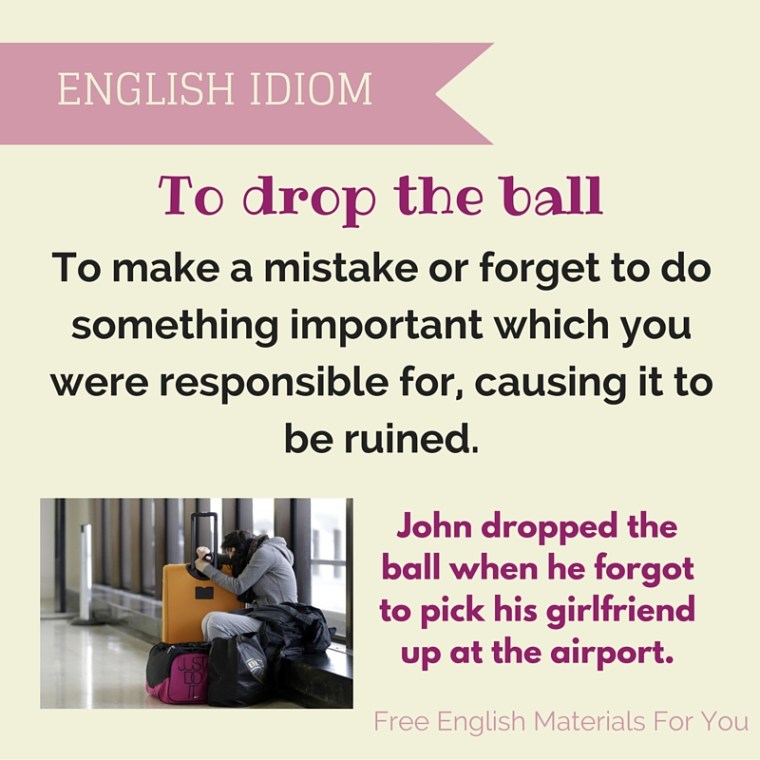
More example sentences from the web:
-
You can’t trust Monica to do the job right. She‘s always dropping the ball.
-
Honey, I totally dropped the ball on Chuck’s present to Sarah.
-
Every time I depend on you, you drop the ball.


A brief history of video games (part 1) – Safwat Saleem – video + fill in the gaps exercise
VOCABULARY
-
Interface: a system that is used for operating a computer.
-
To spread: to become known by many people.
Ex. The news spread quickly. -
Patent: an official document that gives a person or computer the right to be the only one that makes or sells a product for a certain period of time.
-
Mouthful (US): something said that has a lot of meaning or importance.
-
To wonder: to want to know something or to try to understand the reason for something.
Ex. I wonder if she’ll call him. -
Release: the act of making something available to the public.
Ex. The release of her article for publication is scheduled for tomorrow. -
Hit: success
Ex. The song is a hit. -
To heat up: to increase or become more active or intense.
-
To feature: to include someone or something as an important part.
Ex. I consider the measures featured in the report to be insufficient. -
To kick off: to begin, to get started.
Ex. The game kicks off at 2:00. -
Milestone: an important event in the development or history of something or in someone’s life.
Ex. Your poem will be a milestone in the literature of your Country. -
Damsel in distress (old-fashioned): a young woman who is not married and needs to be rescued.
-
Sales: the number of items sold.
-
Merely: only, just.
Ex. It was merely a suggestion.
Downloadable PDF file: A brief history of videogames (part 1) – Vocabulary
Here you can watch this video with subtitles: Ted Ed
Fill in the gaps in the following sentences with the correct form of the words from the vocabulary list written above:
-
In 1972, Bear’s idea to get video games out of the science lab and into the living room led to the _____________ of a game console called Odyssey.
-
A video game is an electronic game that has an ______________ designed for human interaction on a video device.
-
Space Invaders also helped ____________ what is known as the Golden Age of Arcade Games.
-
In fact, the earliest U.S. video game ______________ on record was in 1948, and at the time it was referred to as a cathode-ray tube amusement device. That’s a ______________ !
-
This all changed when a man named Ralph Baer looked at his television screen and ______________ how else it might be used.
-
By 1978, competition between Atari and another game company called Midway was _______________.
-
While arcade games continued to decline in ________________ over the years, the popularity of video games was ________________ beginning […].
-
By 1980, color came to arcade games, and this was also the year that another video gaming _________________ was born.
-
It was an immediate ___________________ and it’s credited as the first commercially successful video game.
-
Video games are used by scientists, the military, and people like you, and their evolution has ________________ across arcades, consoles, computers, smartphones, and all kind of other electronics.
-
It was released in 1987 and, like Donkey Kong, it ___________________ a _______________________ storyline, a storyline common in many video games.
Downloadable PDF file: A brief history of videogames (part 1) – Fill in the gaps exercise with answers
Answers:
1) Release; 2) interface; 3) kick off; 4) patent; mouthful; 5) wondered; 6) heating up; 7) sales; merely; 8) milestone; 9) hit; 10) spread; 11) featured; damsel in distress.
Vegetables – Visual vocabulary 8
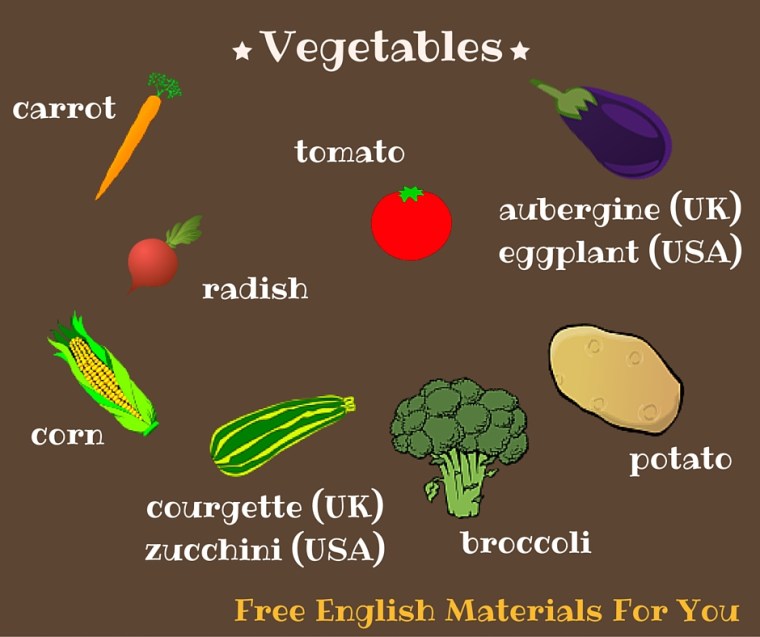
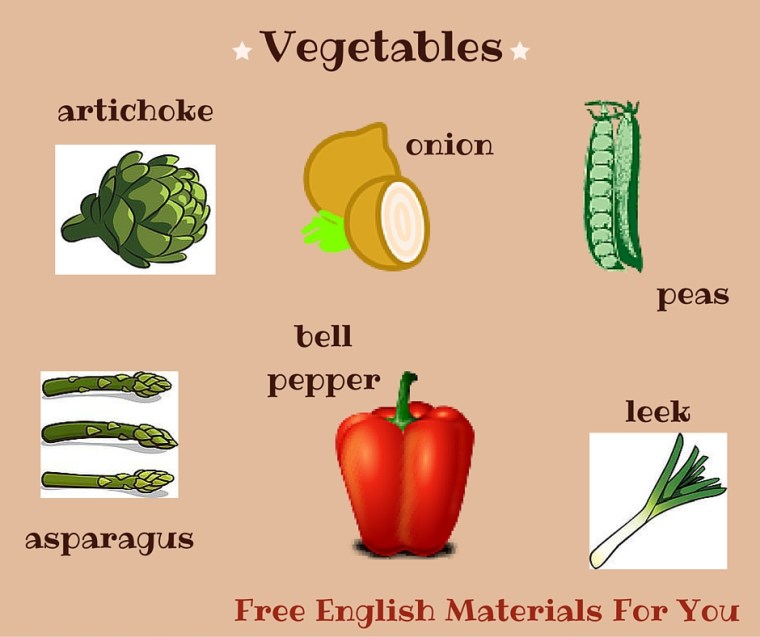
Images source
A crossword on this topic (PDF file): worksheet – vegetables – crossword
The crossword’s answers (PDF file): worksheet – vegetables – crossword’s answers
Word Search Activity: Vegetables – Word Search Activity
“Fair and square” – English idiom

More example sentences from the web:
-
Emily beat you fair and square in Marty’s trials.
-
My father won that money fair and square.
-
I earned it. Fair and square.
Past simple vs past continuous
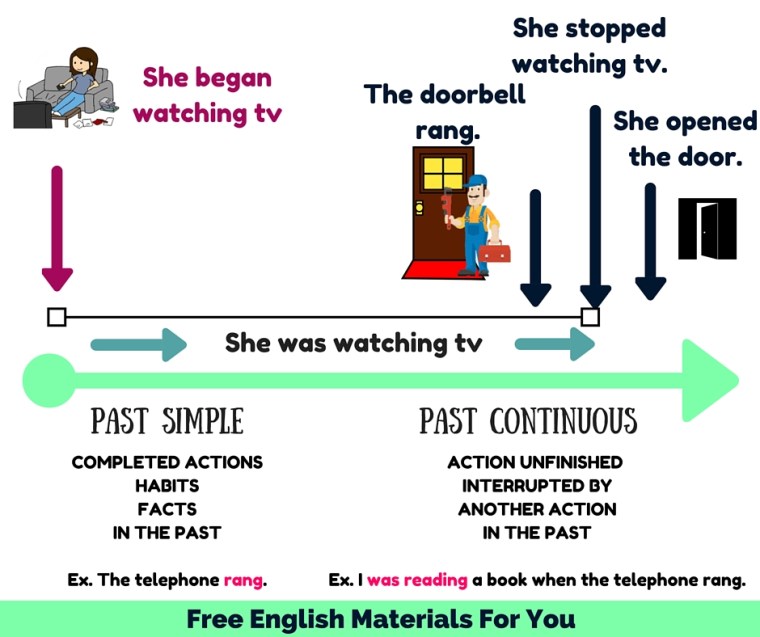
Fill in the gaps with the past simple or past continuous form of the verbs in brackets
-
I ______________ (walk) home when I ______________ (meet) Maria.
-
John __________________ (wait) for me when I ________________ (arrive).
-
I haven’t seen Andrew for ages. When I last _________________ (see) him, he ___________________ (try) to find a job in Dublin.
-
He _________________ (read) the newspaper when the phone _______________ (ring).
-
I _________________ (make) a sandwich when Mike _______________ (arrive).
-
We ________________ (not go) out because it ________________ (rain).
-
When I was young, I _____________ (want) to be a doctor.
-
He usually wears sandals but when I last ______________ (see) him he _________________ (wear) boots.
-
My brother ______________ (see) you in the park two days ago. You__________________ (play) football with Stuart.
-
While I _________________ (work) in the garden, I _________________ (hurt) my back.
Correct answers:
1) was walking; met.
2) was waiting; arrived.
3) saw; was trying.
4) was reading; rang.
5) was making; arrived.
6) didn’t go; was raining.
7) wanted.
8) saw; was wearing.
9) saw; were playing.
10) was working; hurt.
Downloadable PDF – past simple or past continuous – quiz with answers

Collocations with ‘LOVE’ – 2
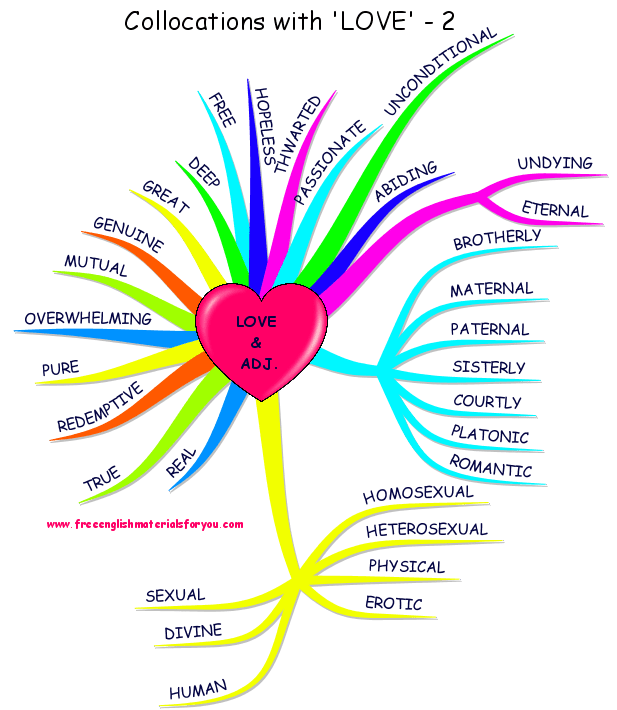
Downloadable IMX file: Biggerplate
Who invented the Internet? And Why?
VOCABULARY
Credit: praise or special attention that is given to someone for doing something or for making something happen.
Example: She got no credit for solving the problem.
To threaten: to tell someone that you will kill or hurt them or cause problems if they do not do what you want.
Example: They threatened the boy with a gun.
Geek: meaning.
Myriad: a very large number of things.
Mainframe: a large and very fast computer that can do many jobs at once.
*Interesting article on this topic: The First Mainframe .
Behemoth: something very big and powerful.
Packet switching: a digital networking communications method that groups all transmitted data into suitably sized blocks called packets.
Congestion: too blocked or crowded and causing difficulties.
Example: Yesterday, there was a traffic congestion.
Gateway: a hardware device that acts as a “gate” between two networks.
To spread: to open, arrange, or place (something) over a large area.
Example: The fire spread very rapidly because of the strong wind.
Steadily: not changing much.
Retail: the sale of goods in small quantities directly to customers.
Downloadable PDF: Who invented the Internet – Vocabulary
Verb tenses review
Fill in the gaps with the correct form of the verbs in the brackets:
- So, have you ever _____________ (to wonder) who actually _____________ (to invent) the Internet?
- Or _________ (to be) it thanks to a myriad of smart scientists ________________ (to work) on something they __________ (to know) _____________ (to be) useful but _______________________ (to realize – negative form) would be so big?
- One popular but wrong story ________ (to be) that the internet ________________________ (to develop) by the USA so they ___________ (to have) a communication network that would survive a nuclear war.
- With time-sharing, these behemoths could ______________ (to process) several tasks at a time, which _____________ (to mean) their power could be used by several scientists at once.
- And, obviously, once you _________________ (to start) ___________________ (to connect) computers together you ________________ (to start) to wonder about what you ________________ (to need)to do to make communications between them easier.
- The French also _______________ (to play) a role. They _________________________ (to work) on a scientific network called CYCLADES, but they ______________ (to have – negative form) a big budget, so they ________________(to decide) to work on direct connections between computers, as opposed to working with gateway computers.
- The TCP/IP protocols _______________ (to form) the basic communication language of the internet, which _______________ (to label) the packets of data and ________________(to make) sure that even though some pieces of the same data ____________________ (to take) a different route, they all _________________ (to arrive) at their destination and can be reassembled.
- Networks really ________________ (to begin) ________________________ (to communicate) with each other in 1975, so you could _______________ (to argue) that __________________ (to be) the beginning of the internet.
- Most internet traffic in 1976 _____________ (to be) email, because academics ____________________ (to think) electronic post-it notes ______________ (to be) dead-core.
- He _____________ (to do) so by __________________ (to invent) an interface _________________ (to use) HTTP, HTML, and URLs that _________________ (to make) internet browsers possible.
Downloadable PDF: Who invented the Internet – fill in the gaps activity
Correct answers: Correct answers – Fill in the gaps activity – Who invented the internet
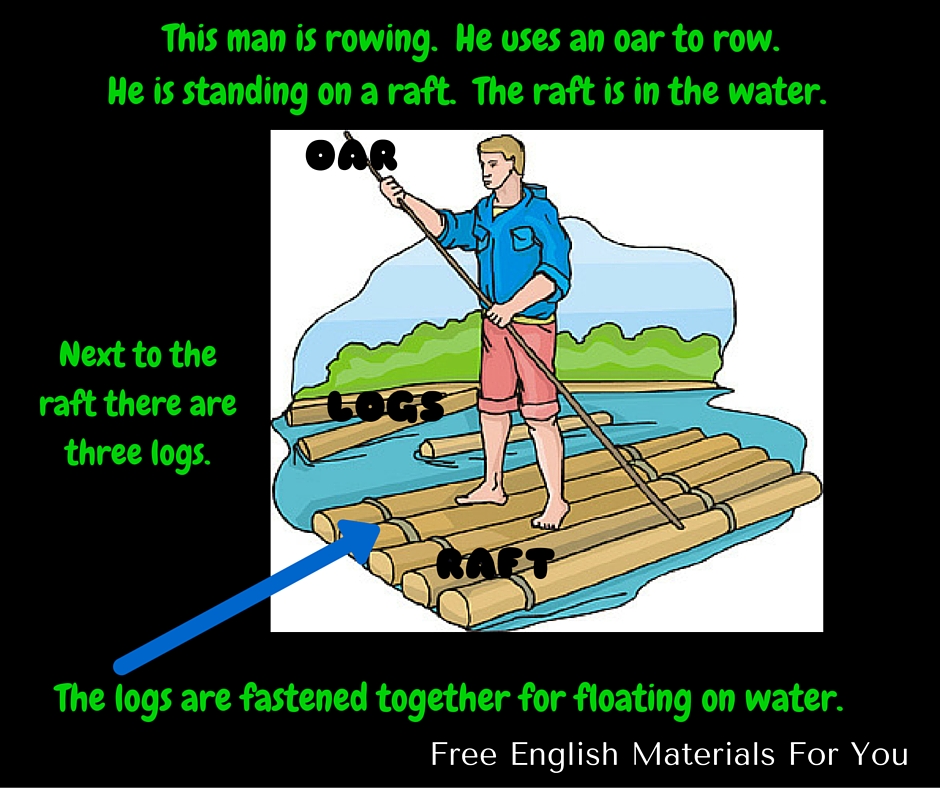
Visual vocabulary 5
To hang out – English slang
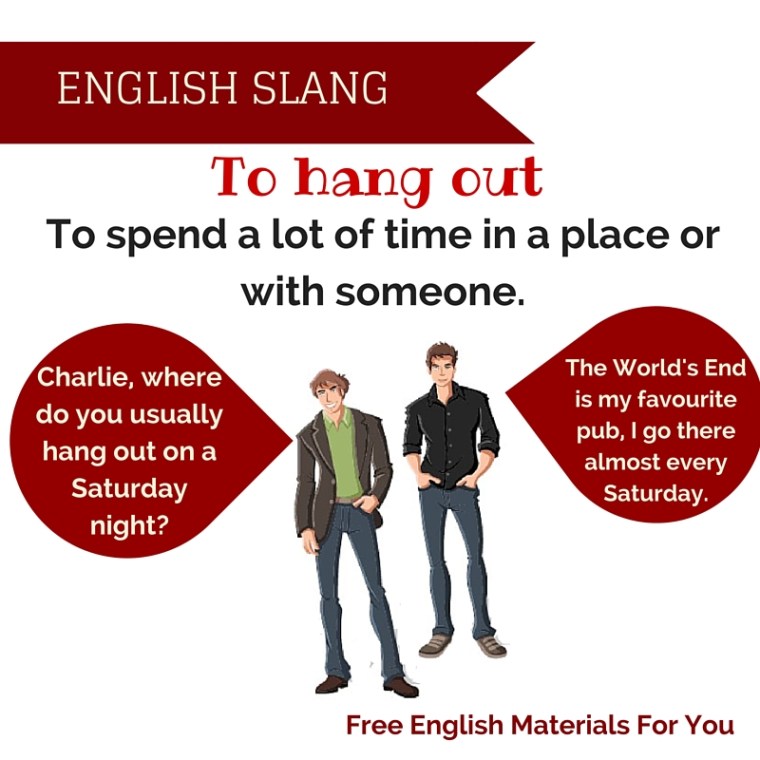
Example sentences from the web:
-
Since he got a girlfriend he stopped hanging out with his friends.
-
Byron and some of the other poetic dudes are planning to hang out at Jack Straws before we go to sup. Like to join us?
-
You still hang out at the pool hall?
 Free English Materials For You