
Future tenses – quiz for FCE

Test your knowledge of future tenses for First Certificate English Cambridge Test - Free English Materials For You

Downloadable PDF file (without answers):FCE Preparation – Test your knowledge of future tenses
Downloadable PDF (answers):FCE Preparation – Test your knowledge of future tenses – Answers

The second episode of English4Gamers is out!

In this episode, we are going to play Street Fighters II Turbo, another retro game. At the beginning of the video, you will learn some words you may not know. Then, while watching the episode, you will have to answer to some questions. I hope you will like it ;-).
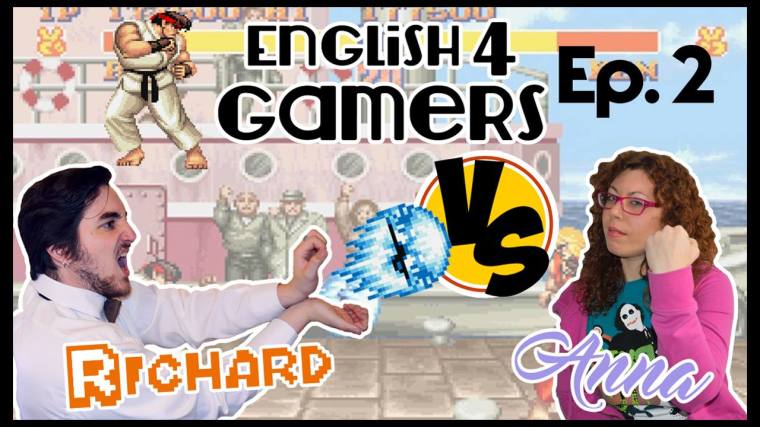
English4Gamers - Episode 2 - Street Fighter II.jpg

If you just want to watch the video, without the quiz, you can watch it here:

Words you will hear and you may not know:

  • TO KICK SOMEONE’S ASS= to beat someone in a game, competition or argument.
  • PUNCH = a quick hit with your fist.punch.jpg
  • KICK = an act of hitting someone or something with your foot.kick.png

  • UNFAIR = not fair; not right; not acceptable.
  • BEAM = a line of light coming from a source.
    beam of light meaning.jpg
  • MONK = a member of a religious community.
  • OPPONENT = adversary; a person, team, group, etc., that is competing against another in a contest.


Listening activity – English4Gamers

Watch the first episode of English for gamers and fill in the gaps with the missing words

  1. A: You are the good gamer […] you __________________.
  2. A: He ____________________ . I _____________ like ten times.
  3. R: I didn’t get the ____________ score. That’s ________.
  4. A: So, this is a _________ of cake.
  5. R: With the flower you can _________________ fire.
  6. R: You have ____________  the second controller.
  7. R: Can you say it? Restart? That ____________  like Richard.
  8. R: You are too ____________ you can’t break it _____________ now.
  9. A: I _____________  my ________________. […] I would like you _____________ me when there is a mushroom somewhere maybe.
  10. R: Time is running ___________.
  11. A: These creatures are blue. What’s the __________________?
  12. R: There is no light so it’s all in ___________________.
  13. R: On the sides of the ______________ the game doesn’t exist. So if you go ____________________, you can’t go back.
  14. R: How do you say it? The ______________ on the back of the turtles?
  15. A: You _______________________  fun of me.
  16. A: Okay guys, __________ _____ it for today. So … See you next week!

Downloadable PDF file: Episode 1 – English4Gamers – Fill in the gaps

Answers: Episode 1 – English4Gamers – Fill in the gaps – Answers

A brief history of video games (part 1) – Safwat Saleem – video + fill in the gaps exercise

VOCABULARY

  • Interface: a system that is used for operating a computer.

  • To spread: to become known by many people.
    Ex. The news spread quickly.

  • Patent: an official document that gives a person or computer the right to be the only one that makes or sells a product for a certain period of time.

  • Mouthful (US): something said that has a lot of meaning or importance.

  • To wonder: to want to know something or to try to understand the reason for something.
    Ex. I wonder if she’ll call him.

  • Release: the act of making something available to the public.
    Ex. The release of her article for publication is scheduled for tomorrow.

  • Hit: success
    Ex. The song is a hit.

  • To heat up: to increase or become more active or intense.

  • To feature: to include someone or something as an important part.
    Ex. I consider the measures featured in the report to be insufficient.

  • To kick off: to begin, to get started.
    Ex. The game kicks off at 2:00.

  • Milestone: an important event in the development or history of something or in someone’s life.
    Ex. Your poem will be a milestone in the literature of your Country.

  • Damsel in distress (old-fashioned): a young woman who is not married and needs to be rescued.

  • Sales: the number of items sold.

  • Merely: only, just.
    Ex. It was merely a suggestion.

Downloadable PDF file: A brief history of videogames (part 1) – Vocabulary

Here you can watch this video with subtitles: Ted Ed

Fill in the gaps in the following sentences with the correct form of the words from the vocabulary list written above:

  1. In 1972, Bear’s idea to get video games out of the science lab and into the living room led to the _____________ of a game console called Odyssey.

  2. A video game is an electronic game that has an ______________ designed for human interaction on a video device.

  3. Space Invaders also helped ____________ what is known as the Golden Age of Arcade Games.

  4. In fact, the earliest U.S. video game ______________ on record was in 1948, and at the time it was referred to as a cathode-ray tube amusement device. That’s a ______________ !

  5. This all changed when a man named Ralph Baer looked at his television screen and ______________ how else it might be used.

  6. By 1978, competition between Atari and another game company called Midway was _______________.

  7. While arcade games continued to decline in ________________ over the years, the popularity of video games was ________________ beginning […].

  8. By 1980, color came to arcade games, and this was also the year that another video gaming _________________ was born.

  9. It was an immediate ___________________ and it’s credited as the first commercially successful video game.

  10. Video games are used by scientists, the military, and people like you, and their evolution has ________________ across arcades, consoles, computers, smartphones, and all kind of other electronics.

  11. It was released in 1987 and, like Donkey Kong, it ___________________ a _______________________ storyline, a storyline common in many video games.

Downloadable PDF file: A brief history of videogames (part 1) – Fill in the gaps exercise with answers

Answers: 

1) Release; 2) interface; 3) kick off; 4) patent; mouthful; 5) wondered; 6) heating up; 7) sales; merely; 8) milestone; 9) hit; 10) spread; 11) featured; damsel in distress.


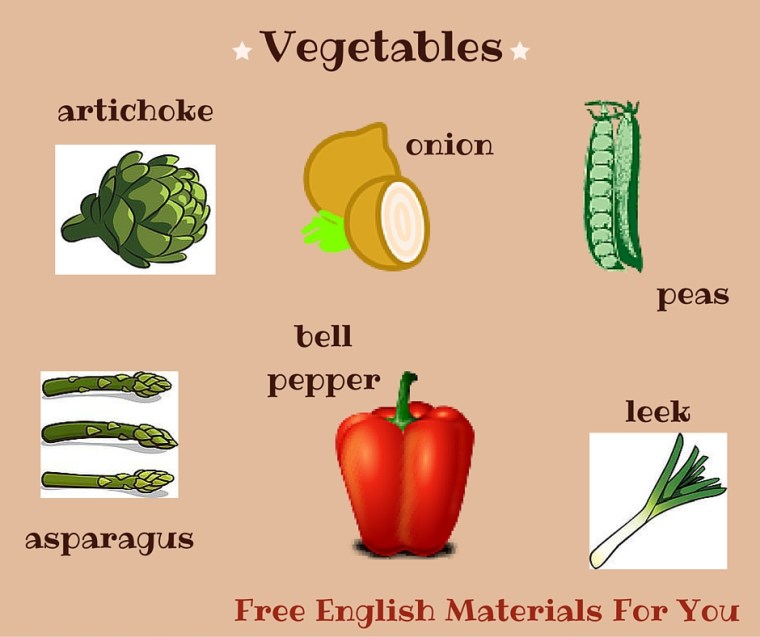
Vegetables – Visual vocabulary 8

Vegetables - visual vocabulary - visual English - Free English Materials For You.jpg

Vegetables - visual vocabulary - visual English - Free English Materials For You (1).jpg

Images source

A crossword on this topic (PDF file): worksheet – vegetables – crossword

The crossword’s answers (PDF file): worksheet – vegetables – crossword’s answers

Word Search Activity: Vegetables – Word Search Activity


Who invented the Internet? And Why?

VOCABULARY

Creditpraise or special attention that is given to someone for doing something or for making something happen.
Example: She got no credit for solving the problem.

To threaten: to tell someone that you will kill or hurt them or cause problems if they do not do what you want.
ExampleThey threatened the boy with a gun.

Geek: meaning.

Myriad: a very large number of things.

Mainframe: a large and very fast computer that can do many jobs at once.

*Interesting article on this topic: The First Mainframe .

Behemoth: something very big and powerful.

Packet switching:  a digital networking communications method that groups all transmitted data into suitably sized blocks called packets.

Congestion: too blocked or crowded and causing difficulties.
Example: Yesterday, there was a traffic congestion

Gateway: a hardware device that acts as a “gate” between two networks.

To spread: to open, arrange, or place (something) over a large area.
Example: The fire spread very rapidly because of the strong wind.

Steadily: not changing much.

Retail: the sale of goods in small quantities directly to customers.

Downloadable PDF: Who invented the Internet – Vocabulary

Verb tenses review

Fill in the gaps with the correct form of the verbs in the brackets:

  1. So, have you ever _____________ (to wonder) who actually _____________ (to invent) the Internet?
  2. Or _________ (to be) it thanks to a myriad of smart scientists ________________ (to work) on something they __________ (to know) _____________ (to be)  useful but _______________________ (to realize – negative form) would be so big?
  3. One popular but wrong story ________ (to be) that the internet ________________________ (to develop) by the USA so they ___________ (to have) a communication network that would survive a nuclear war.
  4. With time-sharing, these behemoths could ______________ (to process) several tasks at a time, which _____________ (to mean) their power could be used by several scientists at once.
  5. And, obviously, once you _________________ (to start) ___________________ (to connect) computers together you ________________ (to start) to wonder about what you ________________ (to need)to do to make communications between them easier.
  6. The French also _______________ (to play) a role. They _________________________ (to work) on a scientific network called CYCLADES, but they ______________ (to have – negative form) a big budget, so they ________________(to decide) to work on direct connections between computers, as opposed to working with gateway computers.
  7. The TCP/IP protocols _______________ (to form) the basic communication language of the internet, which _______________ (to label) the packets of data and ________________(to make) sure that even though some pieces of the same data ____________________ (to take) a different route, they all _________________ (to arrive) at their destination and can be reassembled.
  8. Networks really ________________ (to begin) ________________________ (to communicate) with each other in 1975, so you could _______________ (to argue) that __________________ (to be) the beginning of the internet.
  9. Most internet traffic in 1976 _____________ (to be) email, because academics ____________________ (to think) electronic post-it notes ______________ (to be) dead-core.
  10. He _____________ (to do) so by __________________ (to invent) an interface _________________ (to use) HTTP, HTML, and URLs that _________________ (to make) internet browsers possible.

Downloadable PDF: Who invented the Internet – fill in the gaps activity

Correct answers: Correct answers – Fill in the gaps activity – Who invented the internet
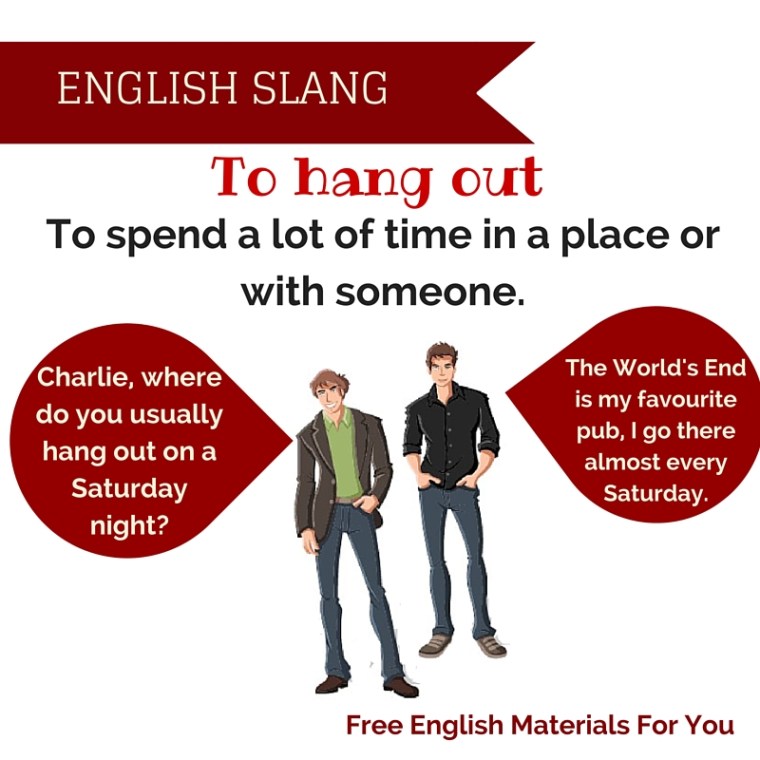


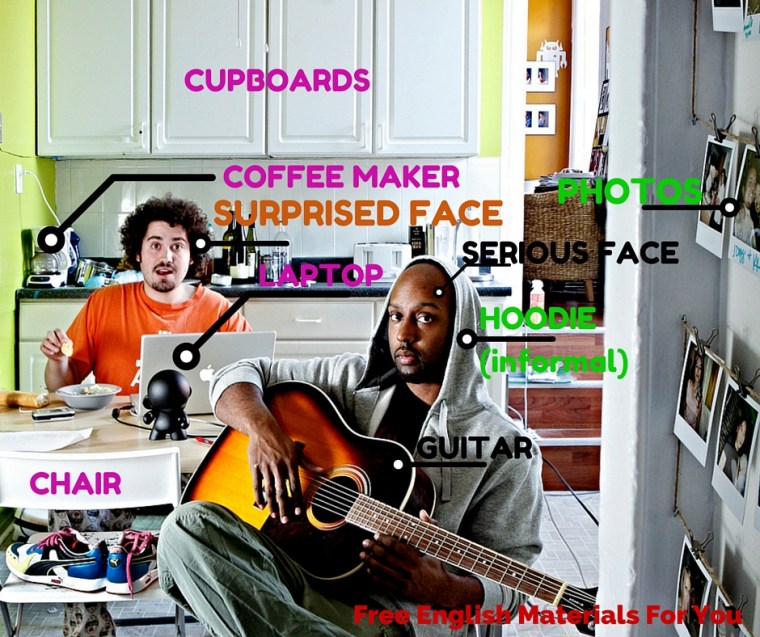
To hang out – English slang

ENGLISH IDIOM.jpg

Example sentences from the web:

  • Since he got a girlfriend he stopped hanging out with his friends.

  • Byron and some of the other poetic dudes are planning to hang out at Jack Straws before we go to sup. Like to join us?

  • You still hang out at the pool hall?

“To apologise” – What does it mean?

TO APOLOGISE

You can apologise:
– to someone
He apologised to his colleagues.
– for something
She apologised profusely for the damage she had caused.
– for doing something
They apologised for accusing her falsely.

– to someone for something
I must apologise to Jasmine for my lateness.

– to someone for doing something
He apologised to his wife and children for losing his temper.

“Apologize” – by Timbaland ft. One Republic

I’m holding on your rope, got me ten feet off the ground
And I’m hearing what you say, but I just can’t make a sound
You tell me that you need me then you go and cut me down, but wait
You tell me that you’re sorry, didn’t think I’d turn around, and say (that)

“It’s too late to apologize (it’s too late).”
I said, “It’s too late to apologize (it’s too late).”

I’d take another chance, take a fall, take a shot for you
And I need you like a heart needs a beat, but it’s nothin’ new (yeah)
I loved you with a fire red, now it’s turning blue, and you say,
“Sorry,” like the angel heaven let me think was you, but I’m afraid…

“It’s too late to apologize (it’s too late).”
I said, “It’s too late to apologize (it’s too late).”

“It’s too late to apologize (it’s too late).”
I said, “It’s too late to apologize (it’s too late).”

I said, “It’s too late to apologize,” yeah (too late)

I’m holdin’ on your rope, got me ten feet off the ground

A game on this song: LyricsTraining

An article on Wikipedia on spelling differences between British and American English: American and British English Spelling Differences.

PDF version for teachers (printable): To apologise
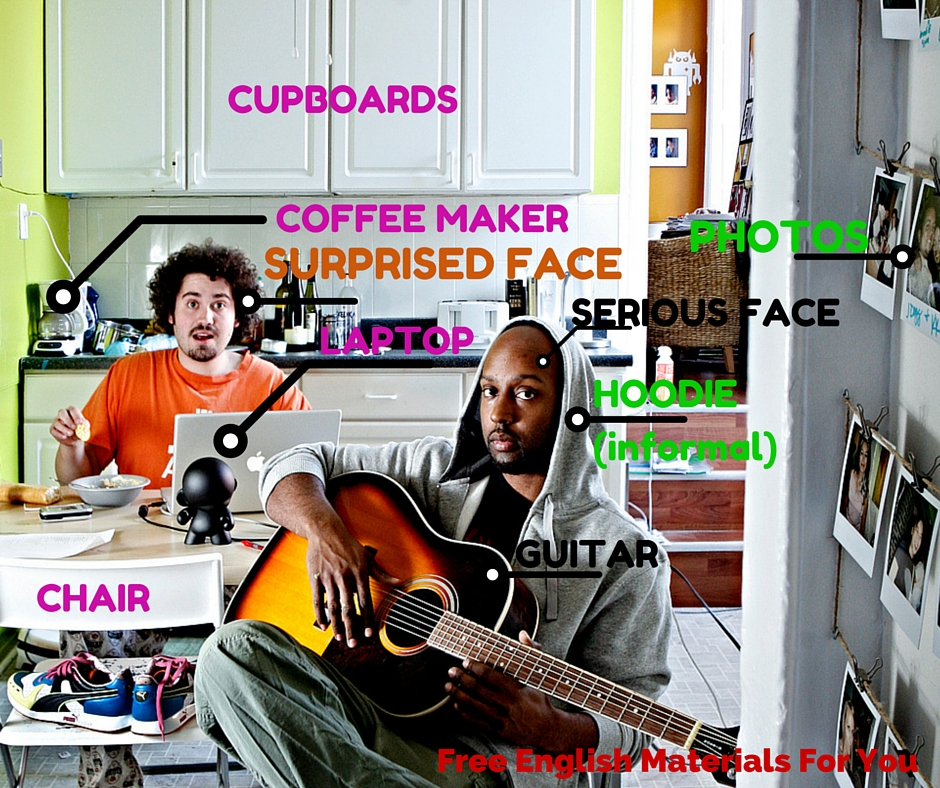
“Stranger in Brașov”- Video with quiz

VOCABULARY:

Lonesome, lonely: sad from being apart from other people.

To set off: to begin a journey

Cement: a soft gray powder that is mixed with water and other substances to make concrete.cement.jpg

To grin: to smile widely.

Cozy: small, comfortable, and warm.

Crochet throws: crochet throws.jpg

To wolf down: (slang) to eat something very rapidly and in very large pieces.

To slip: to move quietly and cautiously.

Feast: a special meal with large amounts of food and drink.

Profusely: given, produced, or existing in large amounts.

Array: a large number, as of persons or objects.

Sinking: anxious.

To stiffen: to become physically tense.

Hasty: done or made very quickly.

Watch the video and answer the questions below:

1.Where did the story take place?
2. How did the old lady receive her unexpected guest?
3. The protagonist met a little girl, who did she think she was?
4. What did they watch on TV?
5. Why did the old woman slip out?
6. What did the old woman cook?
7. How did they communicate?
8. When did the guest understand that they were not her friend’s relatives?
9. What did she do to get out of that embarrassing situation?
10. What was the mistake?

Answers:

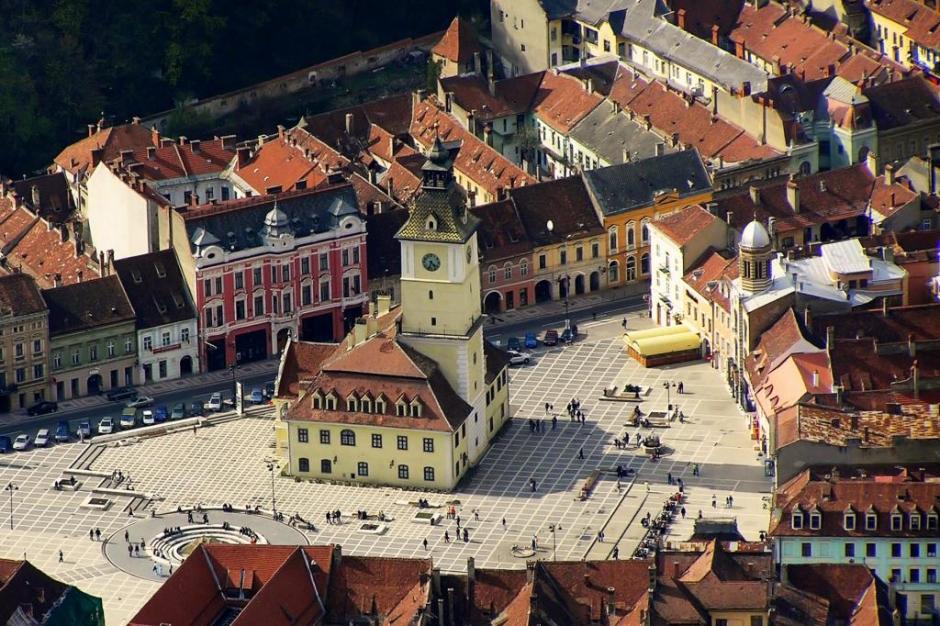
1. It took place in Brașov, in Romania.
2. The old lady received her guest with a big grin (smile).
3. She thought she was her friend’s sister.
4. They watched soap operas on TV.
5. The old woman went out to buy food.
6. She made soup, meat, and polenta.
7. They communicated with gestures.
8. She understood she made a mistake while looking at pictures. There weren’t pictures of her friend!
9. To get out of that situation, she said that she had previously booked a room in a hotel.
10. She mixed up the numbers. The right apartment number was 98. 

A STRANGER IN BRASOV – VOCABULARY

A STRANGER IN BRASOV – VIDEO, QUESTIONS, AND ANSWERS