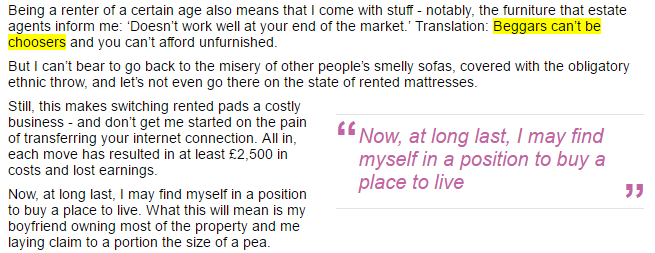
Beggars can’t be choosers – English proverb


beggars can't be choosers- vocabulary - proverb saying Free English Materials For You - femfy (1).jpg
For those who don’t know the meaning of “beggar”:

BEGGAR => a person who lives by asking for money, food, etc.

Beggars can't be choosers meaning - femfy.png

Image source

Article from Daily  Mail Online

Humiliations of being a midlife renter: HANNAH BETTS is 45, gainfully employed – and has never been a homeowner

[…]

18-07-2016-05-51-01

[…]


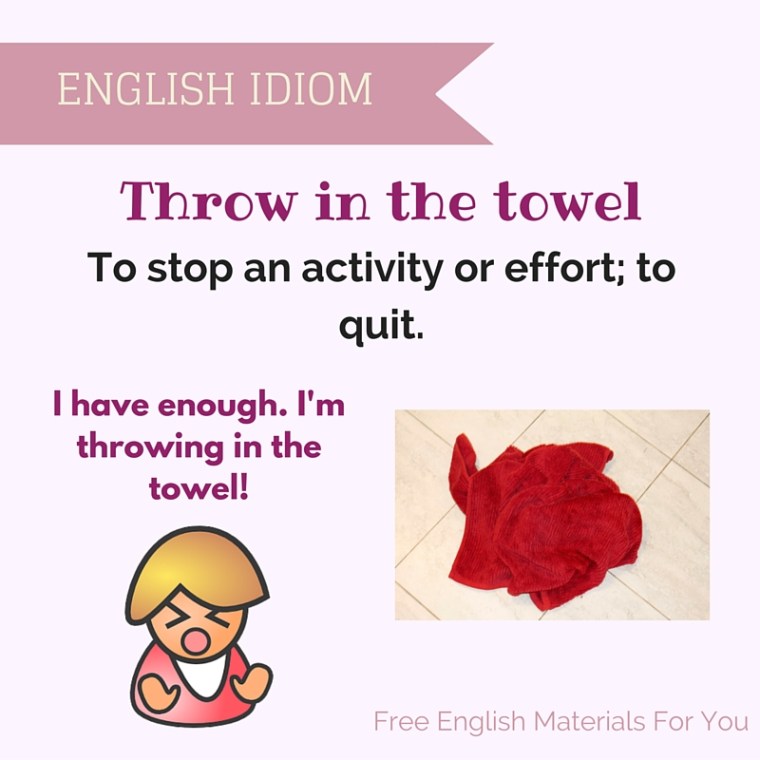
Throw in the towel – English idiom

drop the towel idiom- vocabulary - quit Free English Materials For You - femfy (1).jpg

Example sentences from the web:

  • She’s not a quitter, she won’t throw in the towel.
  • You threw in the towel a long time ago.
  • In the matter that put us in opposition to China, the European Union threw in the towel by agreeing to reassess the import quotas.
  • Every time something didn’t work, we just threw in the towel and said, “Let’s forget it.” Right?
  • You think about throwing in the towel, retiring.

Click here if you are curious and you want to know the origin of this idiom:
Origin of “throw in the towel”.

throwing the towel example fun

Image source

Tie the knot – English idiom

tie the knot meaning - idiom- vocabulary - getting married Free English Materials For You - femfy.jpg

Example sentences from the web:

  • A: When do you plan to tie the knot?
    B: Let me find a boyfriend first!
  • So when are you two going to tie the knot?
  • The girl I’m going to marry lives in Mauritius and she’ll have her own ideas about where she wants to tie the knot.

If you are curious about the origin of this idiom, check this: Tie the knot – Origin

“Tie the knot” in the news:

Just married! Ciara and Russell Wilson share first picture after fairy tale wedding in British castle with guests including Jennifer Hudson and Kelly Rowland 

Ciara and Russell Wilson are officially married.

The happy couple tied the knot in front of their closest friends and family – including Jennifer Hudson and Kelly Rowland – on Wednesday at a fairy tale castle in Cheshire. 

The bride wore a custom Roberto Cavalli gown as she exchanged vows with the Seattle Seahawks player at the UK’s stunning Peckforton Castle in front of their celeb pals. 

Source: Mail Online

Alabama quarterback Blake Barnett set to tie the knot

Source: Sporting News


Nuclear Energy Explained – How does it work? – Listening activity

Video made by In a Nutshell, a Munich-based YouTube channel, and design studio.

In my opinion, this is a very informative channel, great for English students and teachers. This is why I suggest that you check it out: In a Nutshell.

The video I picked for today’s lesson is about nuclear energy and it’s the first of a trilogy. It won’t take you long to watch it since it lasts about 5 minutes. As always, you should read the vocabulary list before watching the video. After that, you can test your listening comprehension answering some questions.

For teachers:

Before watching the video, I suggest that you ask your students what do they know about Nuclear Energy and what do they think are the pros and cons of it. Are they against or for nuclear energy? Can they justify their answer? Ask them to write down their reasons and if you have enough time, made a mind map with all the pros and cons.

VOCABULARY

  • Frustrating: making you feel annoyed or less confident because you cannot achieve what you want.
    Ex. It’s frustrating when you’re not on the same page.

  • Get/come to grips with something: to start to deal with a problem, situation, or job that you have to do.
    Ex. We need to get to grips with our different world views.

  • Spin-off: something useful that results from work done to produce something else.
    Ex. The World Summit on the Information Society produced valuable results; it also had a spin-off, a focusing effect.

  • On your feet: in a good position or condition.
    Ex. Experts say the economy should be back on its feet any year now.

  • Hangover:  a letdown, as after a period of excitement.
    Ex. The students hadn’t recovered from their summer break hangover yet and did terribly on their first test.

  • To stick with something: to continue to do or use something, and not change it.
    Ex. If you’ve found something that makes you happy, you should stick with it.

  • To skyrocket: to increase quickly to a very high level or amount.
    Ex. Housing prices have skyrocketed in recent months.

  • Dazzling: very attractive or exciting.
    Ex. The actor has had a dazzling career.

  • Pace: the speed at which something happens.
    Ex. Since the elections of 1998, the pace of reform has been impressive.

  • Underdog: in a competition, the person or team considered to be the weakest and the least likely to win.
    Ex. It was a surprise to everyone when the underdog won the match.

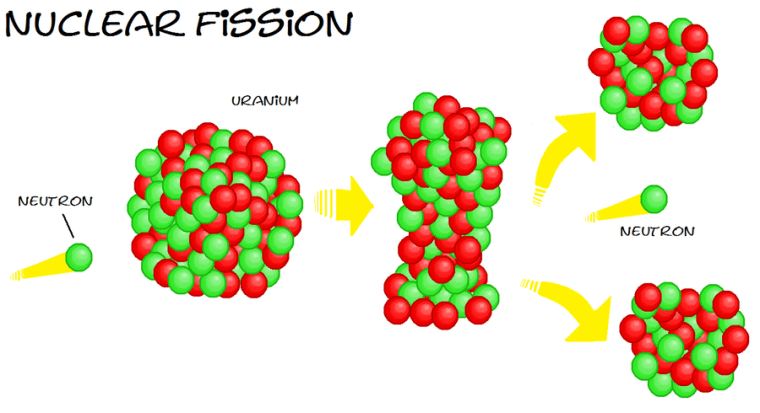
  • Nuclear fission: a process in which the nucleus of a heavy atom is split apart.

    nuclear fission visual.png

    Image source
  •  On the brink of: extremely close to.
    Ex. Eagleton is on the brink of an epic financial disaster.

  •  Turbine: an engine that has a part with blades that are caused to spin by pressure from water, steam, or air.
  • To threaten:  to be likely to harm or destroy something.
    Ex. Difficulties experienced by an individual institution may affect other banks in a way which could threaten the banking system as a whole.

  •  Drawn-out: continuing for or taking a long time.

    Ex. The network doesn’t want a long, drawn-out trial.

Downloadable PDF version: VOCABULARY – Nuclear Energy Explained

After watching the video, try to answer the following questions:

1. What did private companies think about nuclear power?
2. When did nuclear power’s success finally come?
3. What were the advantages of the light water reactor?
4. What does a water reactor do?
5. Is the water reactor the safest one?
6. What happened in 1979?
7. When did the Chernobyl catastrophe take place?
8. What’s the situation today?

Downloadable PDF version (Questions): NUCLEAR ENERGY EXPLAINED – Questions

Downloadable PDF version (Answers): NUCLEAR ENERGY EXPLAINED – Answers


English4Gamers – Episode 11 – Donkey Kong Country

The 11th episode of English4Gamers is out! In this episode, we keep playing Donkey Kong Country (1994), a platforming video game. As always, I suggest that you read the vocabulary list before watching the episode. There is also a fill in the gaps exercise (with downloadable version and answers) to test your listening comprehension.

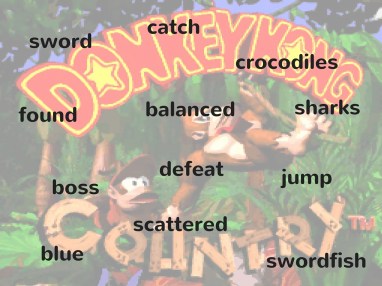
VOCABULARY LIST - episode 11 - English4Gamers - Free English Materials For You - Donkey Kong Country.jpg

  • NEMESIS: an opponent or enemy that is very difficult to defeat.
    Ex. 
    The superhero fought her nemesis for years.
  • SCATTERED: placed or found far apart.
    Ex.
     The toys were scattered all over the room.
  • PRECISE: exact and accurate.
    Ex. 
    Thanks to Marilyn’s precise directions, Louis and Natalie found the house without any problems.
  • HUGE: very large; very great in size, amount, or degree.
    Ex. 
    They live in a huge house.
  • TRICKY: difficult to deal with.
    Ex. 
    It’s tricky to learn  to ride a skateboard, but you never forget how.
  • SEVERAL: more than two but not very many.
    Ex. 
    He arrived several hours ago.
  • TO RETRIEVE: to find and bring back something.
    Ex. 
    Linda hoped she would be able to retrieve her files after her computer crashed.

Downloadable PDF version: English4Gamers – Episode 11 – Donkey Kong Country – Vocabulary

Fill in the gaps in the following sentences with the correct words from the box

Box - words (9)

  1. R: You will find ___________________, octopuses, and normal fish.

  2. A: I’ve___________________a secret passage.

  3. R: There is the ___________________ under that rock.

  4. R: You can still ___________________ him… follow him.

  5. R: With the ___________________ button you attack with your ___________________ .

  6. R: So, this is the last level before the ___________________.

  7. A: I really don’t like these jumping ___________________.

  8. A: They’re ___________________ everywhere.

  9. R: You can die many times if you want to, but it’s good because this is a very hard game so … It’s ___________________.

  10. A: Do I have to ___________________ the boss?!?

  11. R: Often the boss is a bigger version of a normal enemy … So … Like a ___________________ crocodile, a huge shark.

  12. R: You see … Every time you ___________________ on him, he gets faster and faster.

Downloadable PDF version: English4Gamers -Episode 11 – Donkey Kong Country – Fill in the gaps

Downloadable PDF version (answers): English4Gamers – Episode 11 – Donkey Kong Country – Answers


Listening Activity – Jane Austen

This is a listening activity based on The School of Life’s short video (about 7 minutes long) “LITERATURE – Jane Austen”. This activity is aimed at students who have an English level between B2 and C1 (Upper Intermediate and Advanced).

I suggest that you read the following vocabulary list before watching the video. Under the video, there are two exercises (with answers) and a writing practice suggestion. 

VOCABULARY 

  • AMBITIOUS: having a desire to be successful, powerful, or famous; having ambition.
    Ex. She was ambitious enough to aim for the company’s presidency.
     
  • STERN: very serious; severe.
    Ex. Journalists received a stern warning not to go anywhere near the battleship.
     
  • CONSCIOUS: awake, thinking, and knowing what is happening around you.
    Ex. When I took the exam, I was conscious that my parents were expecting a lot of me.

  • DIGNIFIED: serious and somewhat formal; having or showing dignity.
    Ex. Even when very old, he was very dignified in appearance.

  • WELL OFF: moderately rich.
    Ex. They must be well off if they can afford to buy a house there!
     
  • TEMPTED: to want something or to want to do something.
    Ex. “Would you like some more pie?” “I’m tempted, but no thank you.”

  • STRUGGLE: a long effort to do, achieve, or deal with something that is difficult or that causes problems.
    Ex. The people of this country will continue in their struggle for independence.
     
  • TO CONDEMN: to say in a strong and definite way that someone or something is bad or wrong.
    Ex. We strongly condemn this attack against our allies.
     
  • TO OVERCOME: to prevail over (opposition, a debility, temptations, etc.); surmount.
    Ex. To overcome one’s weaknesses.

  • INCOME: money that is earned from work, investments, business, etc.
    Ex. He has a very high annual income.
     
  • TO FELL APART: to break into pieces (often used figuratively).
    Ex. I feel as if my family is falling apart.
     
  • TO SUPPLY: to furnish or provide (something wanting or requisite).
    Ex. To supply a community with electricity.
     
  • WEALTH: a large amount of money or valuable possessions that someone has.
    Ex. The wealth of a city. 
  • ELUSIVE: hard to find or capture.
    Ex. Police are trying to track down the elusive criminal, who has so far avoided all their attempts to capture him.

  • SNOBBISH: like a snob (a person who respects and likes only people who are of a high social class).
    Ex. He’s a snobbish rich kid.

  • GREED: a selfish desire to have more of something (especially money).
    Ex. He was a ruthless businessman, motivated by naked ambition and greed.

Downloadable PDF version: JANE AUSTEN – Vocabulary

Watch the video and answer the following questions

  1. Austen wanted to change people with her novels. How did she want them to become?
  2. When is Jane Austen born and where?
  3. How was the writer’s family social status?
  4. Did she get married?
  5. What’s Jane’s sister name?
  6. How many novels did Jane complete?
  7. What are the titles of the novels she completed?
  8. What are the four main things Jane Austen wanted to teach us?
  9. In Jane Austen’s opinion marriage depends on two factors, do you remember them?
  10. Name the two mistakes people make around money according to Jane Austen.

Writing practice suggestion

  1. Write Jane Austen’s main opinions concerning love, marriage, judging people, money, and being snobbish. Do you agree or disagree with the writer?
    Justify your answer.

Downloadable PDF version: Jane Austen – Listening comprehension

Downloadable PDF version: Jane Austen – Listening comprehension with answers

Watch the video then fill in the gaps in the following sentences

  1. Jane Austen is loved mainly as a guide to fashionable life in the _____________ period, but her own vision of her task was radically different.
  2. She was an ambitious and ______________ moralist.
  3. Born in _____________, Austen grew up in a small village in Hampshire, where her father was the Anglican _________________.
  4. She did much of her writing at a ______________ octagonal table.
  5. The _______________ was her chosen weapon in the struggle to reform humanity.
  6. ________________ starts of feeling superior because he has more money and higher status.
  7. The story ______________ them because they have developed well.
  8. ______________________________ starts when quiet, shy Fanny Price goes to live with her much richer cousins, the Bertrams.
  9. In Pride and Prejudice, she explains that Mr. _________________ has an income of _________________ pounds a year –that’s rather a lot- while Darcy has more than twice that.
  10. At one point in _______________________________, it looks like Elinor Dashwood and Edward Ferrars who are otherwise well suited won’t be able to get married.
  11. In Emma, the heroine –Emma herself- takes ______________________ -a pretty girl from the village- under her wing.

Downloadable PDF version: Jane Austen – Fill in the gaps exercise

Downloadable PDF version: Jane Austen – Fill in the gaps exercise answers


“To rain on someone’s parade” – English idiom

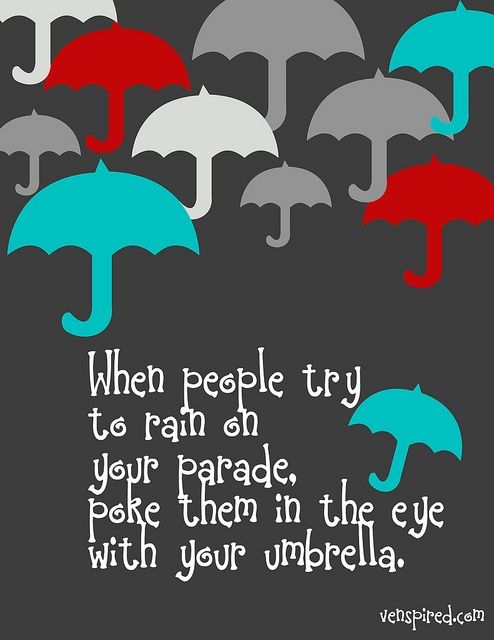
Meaning => to disappoint or discourage someone.


Examples:
rain on someone's parade meaning English idiom Free English Materials For You.png

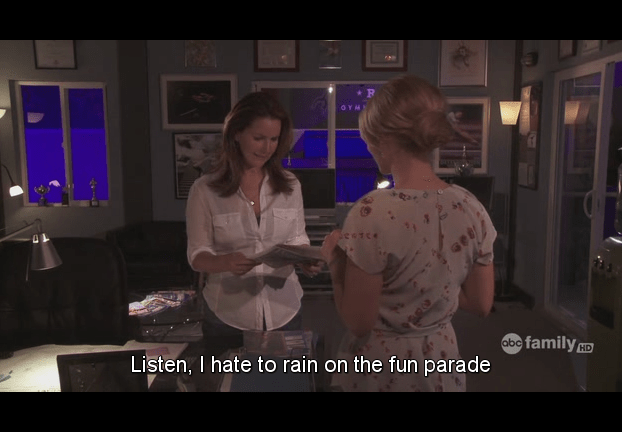
  • “Listen, I hate to rain on the fun parade but has anyone heard from the National Committee?”

rain on your parade.jpgImage source

people only rain on your parade.jpg

Image source

One does not simply rain on someone's parade.jpg

Image source

Don’t Rain On My Parade – Barbra Streisand (Funny Girl)


Don’t tell me not to live
Just sit and putter
Life’s candy and the sun’s
A ball of butter
Don’t bring around a cloud
To rain on my parade
Don’t tell me not to fly
I’ve simply got to

If someone takes a spill
It’s me and not you
Who told you you’re allowed
To rain on my parade!
I’ll march my band out
I’ll beat my drum
And if I’m fanned out
Your turn at bat, sir
At least I didn’t fake it

Hat, sir, I guess I didn’t make it!
But whether I’m the rose
Of sheer perfection
Or freckle on the nose
Of life’s complexion
The cinder or the shiny apple of its eye
I gotta fly once
I gotta try once
Only can die once, right, sir?

Ooh, life is juicy
Juicy, and you see
I gotta have my bite, sir!
Get ready for me, love
Cause I’m a “comer”
I simply gotta march
My heart’s a drummer
Don’t bring around a cloud
To rain on my parade!

I’m gonna live and live now
Get what I want, I know how
One roll for the whole shebang
One throw, that bell will go clang
Eye on the target, and wham
One shot, one gun shot, and bam
Hey, Mister Arnstein, here I am!

I’ll march my band out
I’m beating my drum
And if I’m fanned out
Your turn at bat, sir
At least I didn’t fake it
Hat, sir, I guess I didn’t make it

Get ready for me, love
‘Cause I’m a “comer”
I simply gotta march
My heart’s a drummer
Nobody, no, nobody
Is gonna rain on my parade!

Click here if you want to know the origin of this idiom: Know Your Phrase