
Tag: FCE Vocabulary
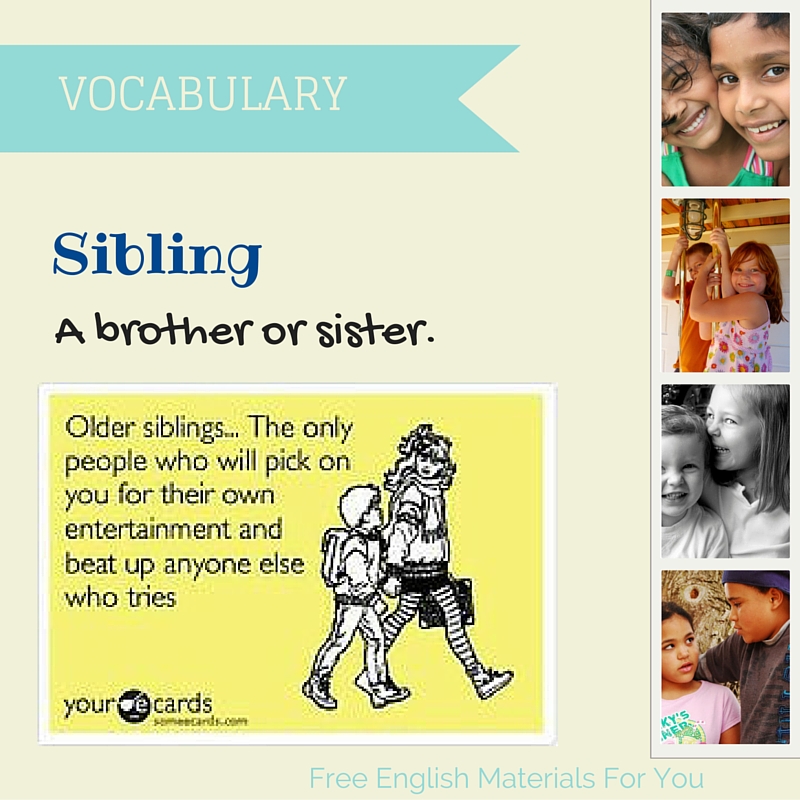
“Sibiling” – What does it mean?
Are You Sure That You Know 5,000 Words in English? Take This Test!!!
Adjectives and opposites
Find the opposites of the words on the left. Choose from the ones in the box on the right:
 Tomorrow the answers will be available on Facebook: Free English Materials (Album: Quizzes’ answers)
Taken from Peter Watcyn-Jones (2000), Test Your Vocabulary 2, Edinburgh, Pearson Education Limited.
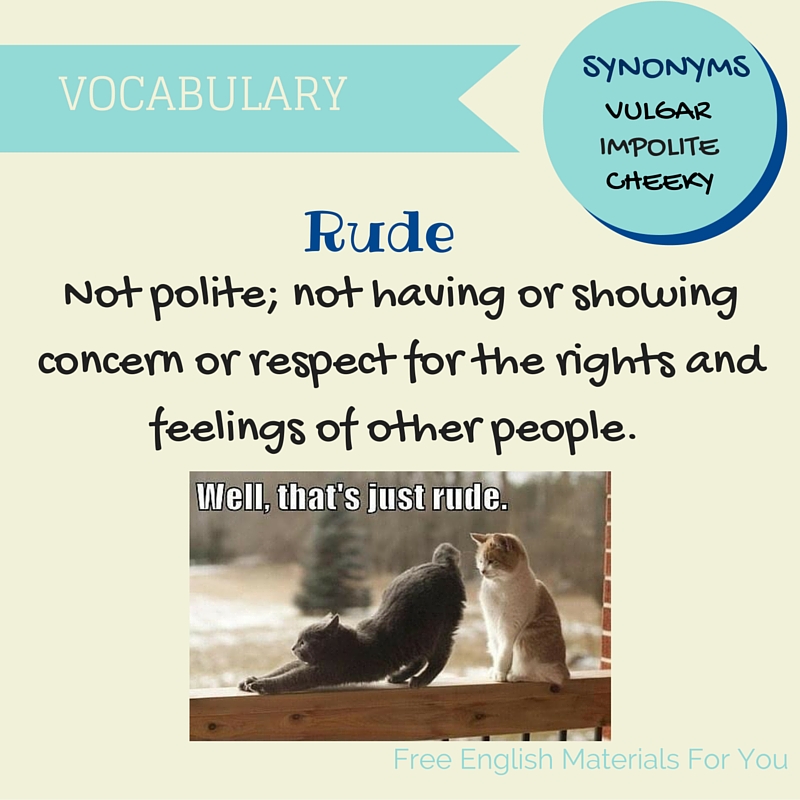
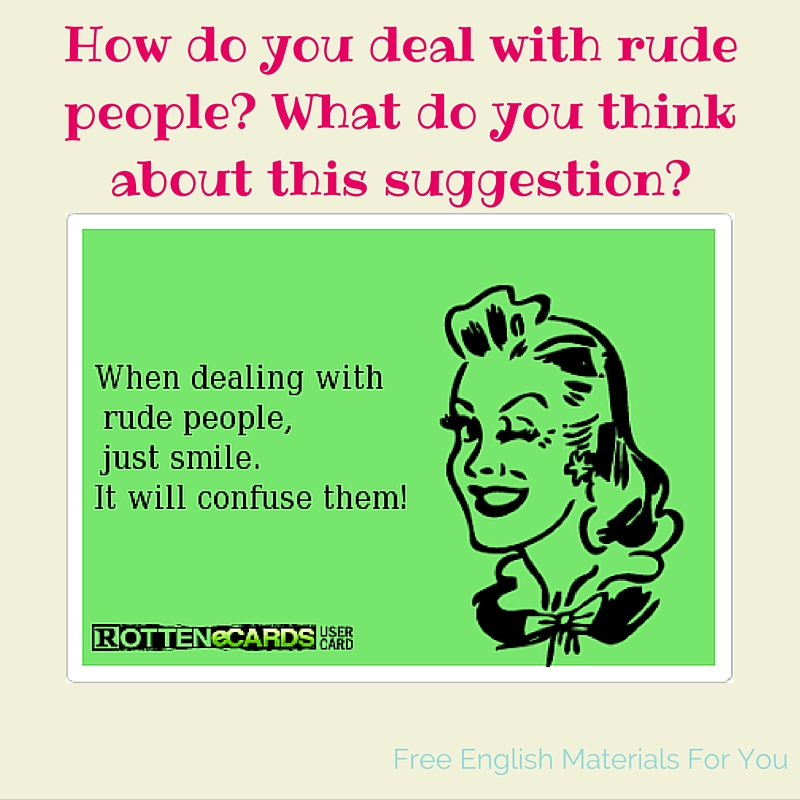
“Rude” – What does it mean?
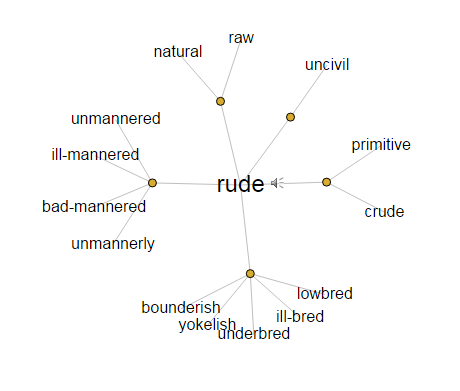
A visual map of rude’s synonyms:
Example sentences from the web:
- He was rude to you, too; he never even noticed that you were in the room, after I came.
- Mary ran away because Frank was rude to her. He told her that she’s getting fat.
- Hans felt he had been rude to Sylvia, but he apologized immediately.
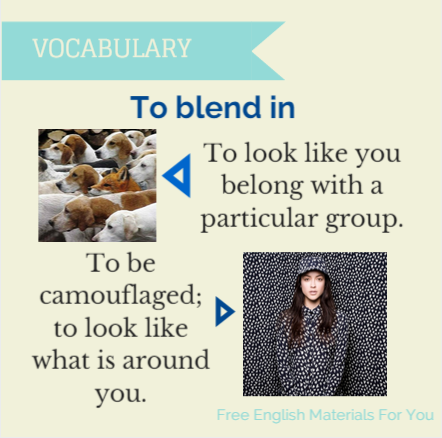
“To blend in” – What does it mean?
“Crowd” – What does it mean?
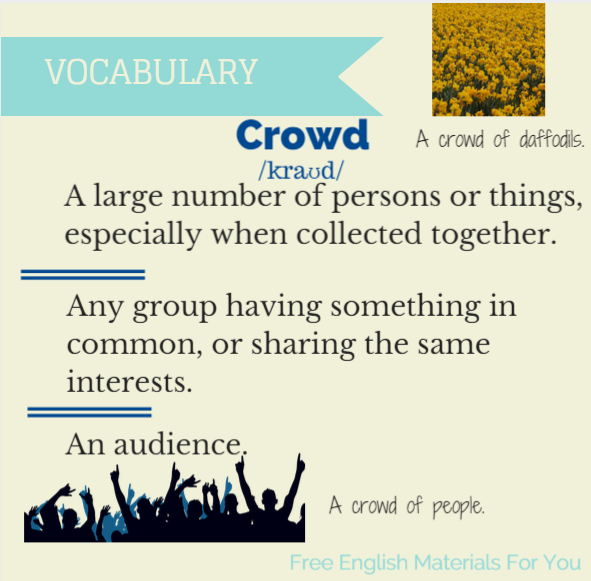
Examples from the web:
– The circus act never failed to attract crowds of curious people.
– The restaurant attracts a theatre crowd.
– The crowd from the office.
– The opening night crowd.
– It took some two hours before the crowd was fully dispersed.
– All the old crowd from my university days were there.
– You can learn to stand out from the crowd.
– When the song finished the crowd went wild.
– He disappeared into the crowd.
“Deadline” – What does it mean?

Agreeing or disagreeing in English – Second version
Someone asked me to make this mind map with a bigger font size. On my computer, I created it as imx file (you can download it from biggerplate.com).Unfortunately, only with iMindmap you can read imx files and I know that not everyone has it. The only thing I can do with mind maps is to use a screen capture program and post them as images. Unfortunately, when I make big mind maps, with a lot of branches, I can’t use a big font size. Consequently, some people could find it difficult to read them. What I can do for them is to write as a normal post what is written in the mind map. If you have any other suggestion, I always welcome new ideas ;-).
By the way, if you click on the mind map image you have the possibility to zoom a little bit.
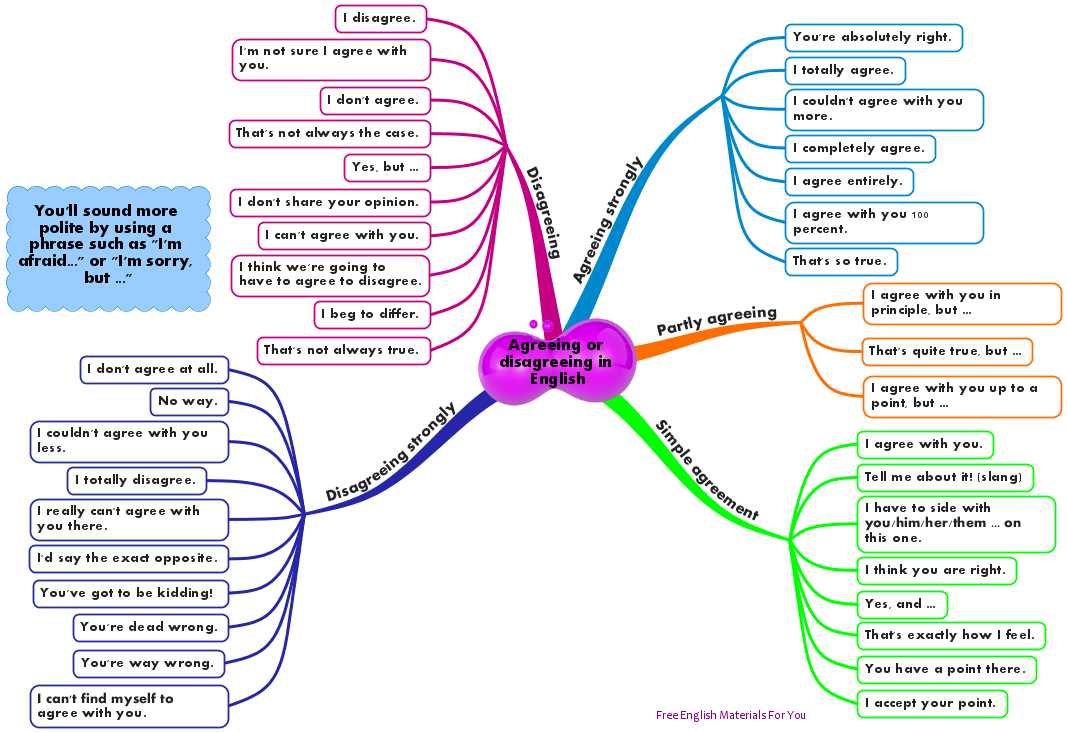
AGREEING OR DISAGREEING IN ENGLISH
Simple agreement:
- I agree with you.
- Tell me about it! (slang)
- I have to side with you/him/her /them … on this one.
- I think you are right.
- Yes, and …
- That’s exactly how I feel.
- You have a point there.
- I accept your point.
Partly agreeing
- I agree with you in principle, but …
- That’s quite true, but …
- I agree with you up to a point, but …
Agreeing strongly
- You’re absolutely right.
- I totally agree.
- I couldn’t agree with you more.
- I completely agree.
- I agree entirely.
- I agree with you 100 percent.
- That’s so true.
Disagreeing
- I disagree.
- I’m not sure I agree with you.
- I don’t agree.
- That’s not always the case.
- Yes, but …
- I don’t share your opinion.
- I can’t agree with you.
- I think we’re going to have to agree to disagree.
- I beg to differ.
- That’s not always true.
Disagreeing strongly
- I don’t agree at all.
- No way.
- I couldn’t agree with you less.
- I totally disagree.
- I really can’t agree with you there.
- I’d say the exact opposite.
- You’ve got to be kidding!
- You’re dead wrong.
- You’re way wrong.
- I can’t find myself to agree with you.
You’ll sound more polite by using a phrase such as “I’m afraid …” or “I’m sorry but …” before disagreeing or disagreeing strongly.
Agreeing or disagreeing in English
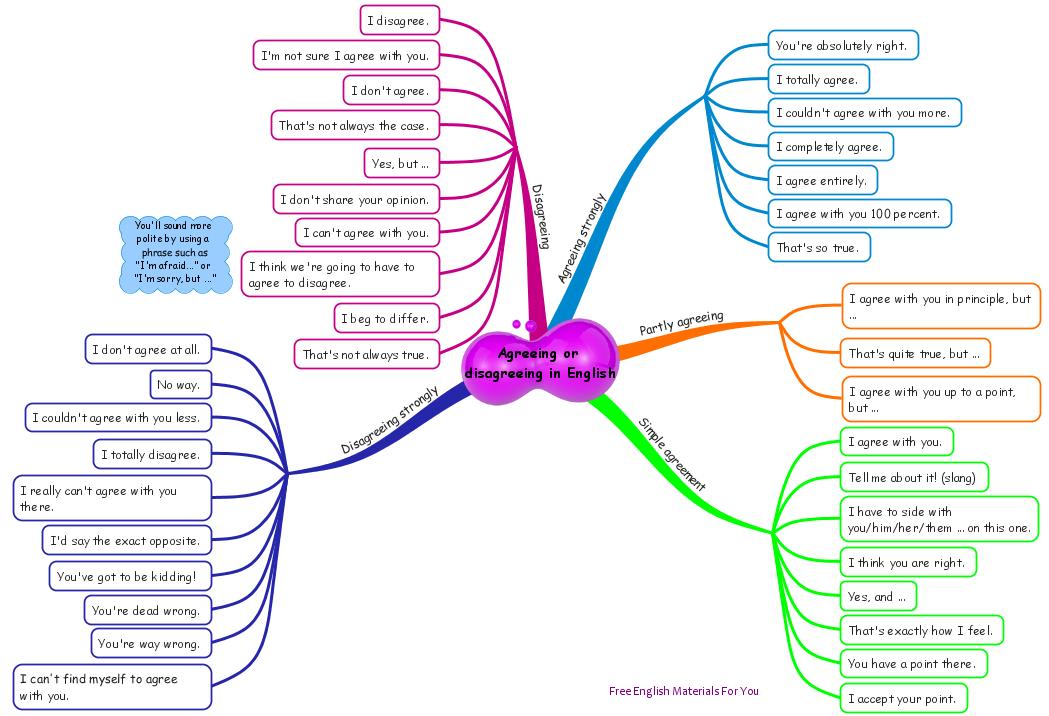
Here you can download the imx file: http://www.biggerplate.com/mindmaps/IppMHyeP/agreeing-or-disagreeing-in-english
 Free English Materials For You