
Images
“Bloke” – British slang

Other examples from the web:
- You blame that bloke for your situation.
- You look like the bloke from Stranger Danger posters.
- Who’s that bloke with the funny sunglasses sitting on the plush lounge next to Susan?
- He’s a funny bloke.
- I was told you had more imagination than other blokes in the big firms.
Terms you may not know:
– TO BLAME = to hold responsible; to find fault with.
– PLUSH = expensive and luxurious.
– LOUNGE = waiting room; casual bar (hotel).
– FIRM = a partnership or association for carrying on a business.
“Groundbreaking” – What does it mean?

Other examples from the web:
- We all commended the new US vision on reaching a framework agreement as groundbreaking and forward-looking.
- The transformation of this elementary teacher, as a result of this groundbreaking work, has occurred at both the personal and transformative levels.
- The decisions taken at the Spring European Council for an integrated energy and climate protection policy are groundbreaking.
Words from the example sentences you may not know:
FORWARD-LOOKING = planning for the future; progressive; modern.
TO OCCUR = to happen; to take place.
TO INTEGRATE = to combine to form/create something; unify.
We all commended the new US vision on reaching a framework agreement as groundbreaking and forward-looking.
“THE BEAUTIFUL THING ABOUT LEARNING IS THAT NOBODY CAN TAKE IT AWAY FROM YOU”. – B.B. KING

When you acquire knowledge, what you’ve learned becomes a part of you. For this reason, nobody can detract it from you. It will always be yours. Of course, if you share your knowledge, be aware that more people will have what you have, which is not a bad thing ;-). So keep learning and continue to share your knowledge!
TO TAKE AWAY = to remove; to detract.
TO END vs TO FINISH – Collocations in English
 Based on: McCarthy, M. O’Dell, F. (2008), Collocations in use, Cambridge: Cambridge University Press.
TO END
- To stop with a clear conclusion. We use it when there’s an important change.
Example: World War II ended in 1945. - END can’t be followed by either the infinitive (to- form) or the -ing form.
Example: Markendeddrying his hair. => This sentence isn’t correct!
The correct sentence is: Mark finished drying his hair.
TO FINISH
- To bring something to an end.
Example: Are you sure you’ll finish your essay by Monday? - To eat, drink the last of something.
Example: I’m sorry, I just finished the coffee. - It can be followed by the -ing form, but not by the infinitive.
Example: Theyhave finishedto play. => This sentence is not correct!
The correct sentence is: They have finished playing.
A smile is the prettiest thing you can wear.

“Down to earth” – English idiom

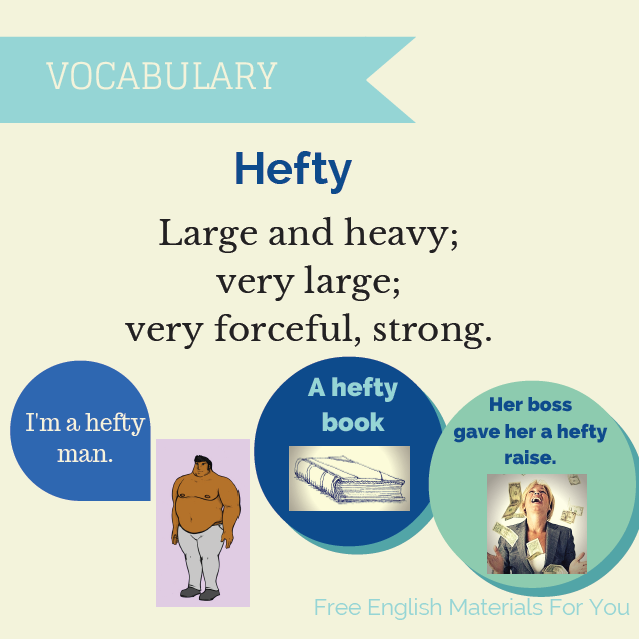
“Hefty” – What does it mean?
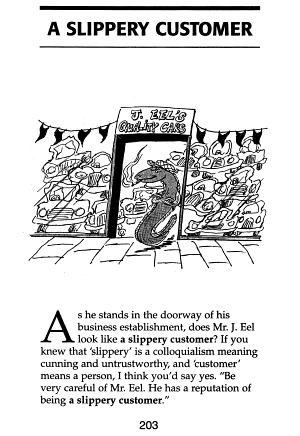
“Slippery customer” – English idiom

Other examples from the web:
- Watch out for that girl with the red hat and don’t believe what she says. She’s a slippery customer.
- He’s a slippery customer, that Tim, I’ve never felt comfortable with him.
Watch out = to be careful; to remain vigilant.
To snatch = to take something or someone quickly and suddenly; to grab.
Untrustworthy = not able to be trusted.
Cunning = getting what is wanted in a clever and often deceptive way.
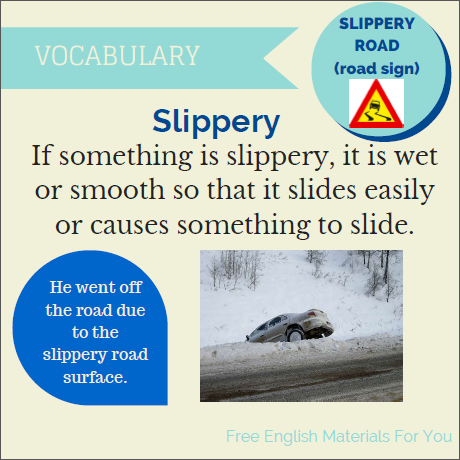
“Slippery” – What does it mean?
 Free English Materials For You