

Tag: IELTS Vocabulary
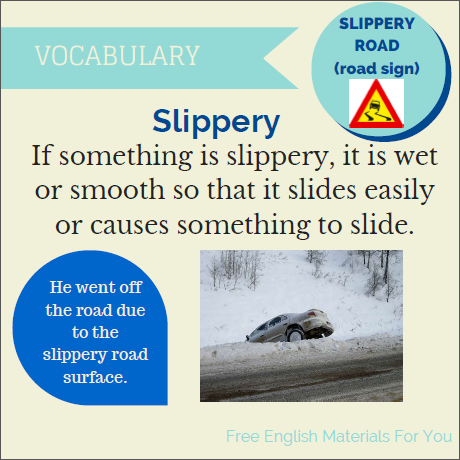
“Slippery” – What does it mean?
“Deadline” – What does it mean?

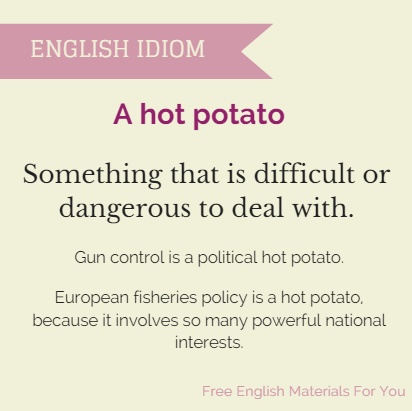
“A hot potato” – English idiom
Agreeing or disagreeing in English – Second version
Someone asked me to make this mind map with a bigger font size. On my computer, I created it as imx file (you can download it from biggerplate.com).Unfortunately, only with iMindmap you can read imx files and I know that not everyone has it. The only thing I can do with mind maps is to use a screen capture program and post them as images. Unfortunately, when I make big mind maps, with a lot of branches, I can’t use a big font size. Consequently, some people could find it difficult to read them. What I can do for them is to write as a normal post what is written in the mind map. If you have any other suggestion, I always welcome new ideas ;-).
By the way, if you click on the mind map image you have the possibility to zoom a little bit.
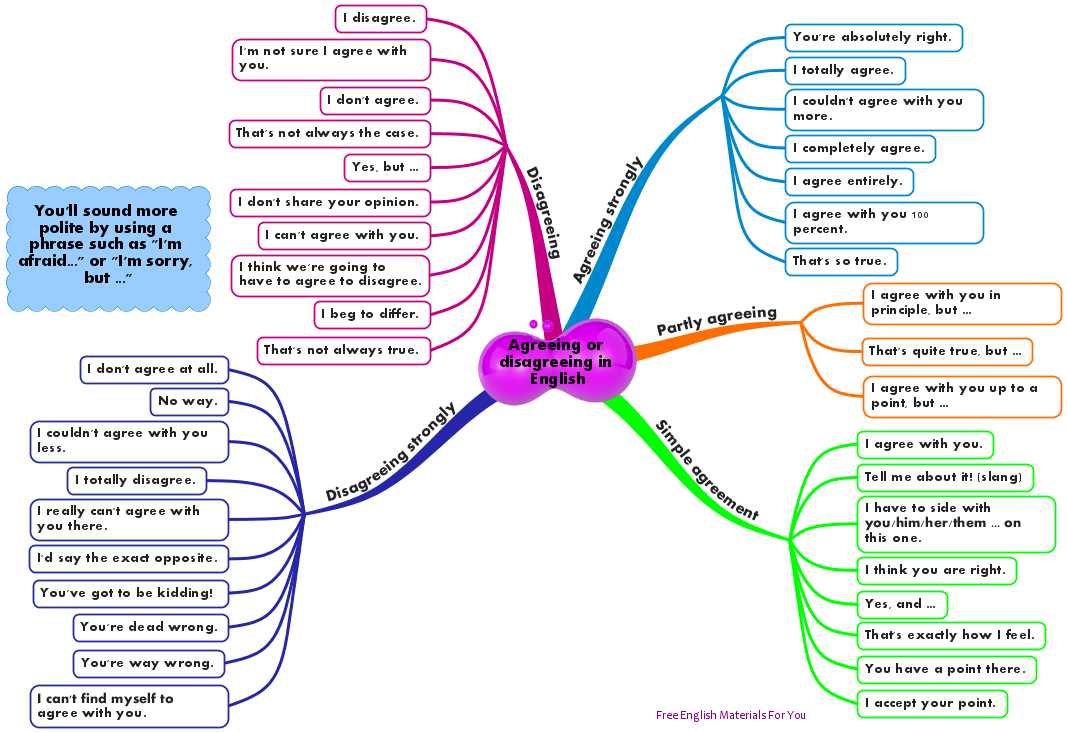
AGREEING OR DISAGREEING IN ENGLISH
Simple agreement:
- I agree with you.
- Tell me about it! (slang)
- I have to side with you/him/her /them … on this one.
- I think you are right.
- Yes, and …
- That’s exactly how I feel.
- You have a point there.
- I accept your point.
Partly agreeing
- I agree with you in principle, but …
- That’s quite true, but …
- I agree with you up to a point, but …
Agreeing strongly
- You’re absolutely right.
- I totally agree.
- I couldn’t agree with you more.
- I completely agree.
- I agree entirely.
- I agree with you 100 percent.
- That’s so true.
Disagreeing
- I disagree.
- I’m not sure I agree with you.
- I don’t agree.
- That’s not always the case.
- Yes, but …
- I don’t share your opinion.
- I can’t agree with you.
- I think we’re going to have to agree to disagree.
- I beg to differ.
- That’s not always true.
Disagreeing strongly
- I don’t agree at all.
- No way.
- I couldn’t agree with you less.
- I totally disagree.
- I really can’t agree with you there.
- I’d say the exact opposite.
- You’ve got to be kidding!
- You’re dead wrong.
- You’re way wrong.
- I can’t find myself to agree with you.
You’ll sound more polite by using a phrase such as “I’m afraid …” or “I’m sorry but …” before disagreeing or disagreeing strongly.
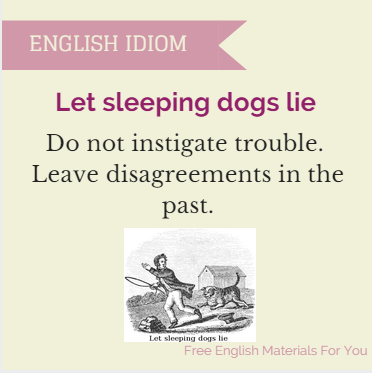
“Let sleeping dogs lie” – English idiom
“Acquaintance” – What does it mean?

Image source: www.CartoonStock.com
“The early bird catches the worm” – English Idiom

Lingro
If you are English students and you want to improve your vocabulary/comprehension skills I suggest that you try this website. Lingro is an amazing resource if you want to read a blog, an online newspaper, etc. You just have to write the link of what you want to read (number one in the picture below). You can select a dictionary (as you can see, I marked “English dictionary” with a red rectangle, but it’s not the only one, there are also English-Spanish, Spanish-English, English-French, English-Italian, etc.).
This is the homepage:
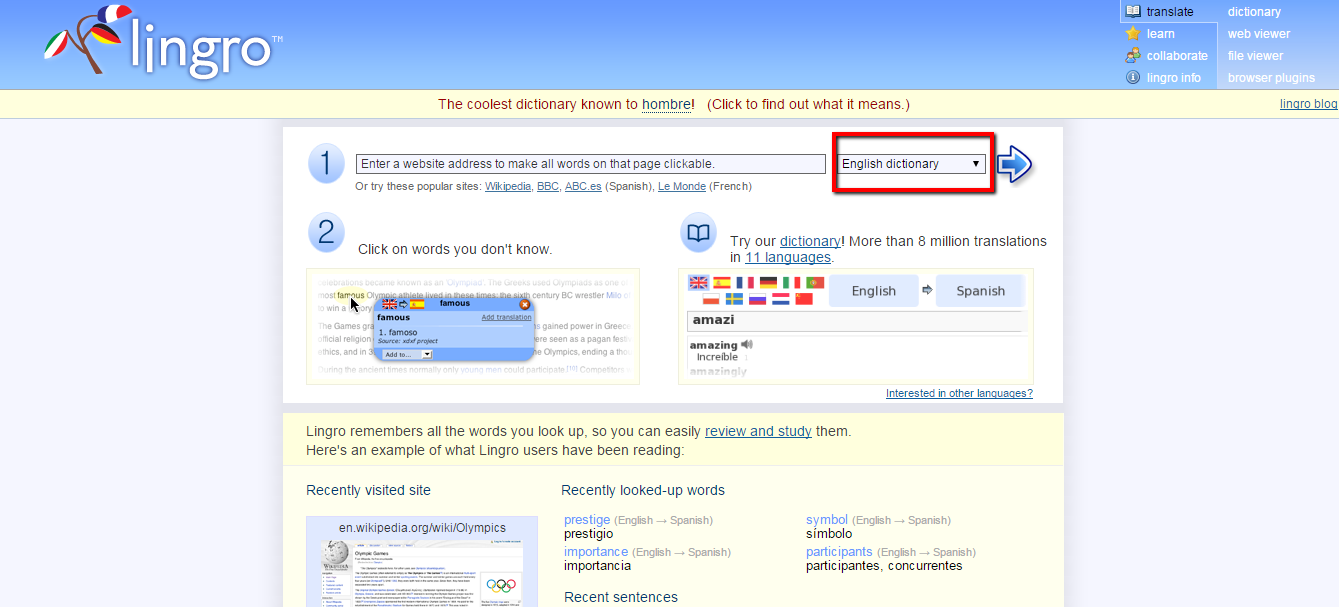 Link: http://lingro.com/
For example, you want to read an article on the website http://www.nationalgeographic.com/ . Firstly, you have to find an article you like, for instance, I decided to read this one: http://news.nationalgeographic.com/2015/04/150406-california-drought-snowpack-map-water-science/
 Then, you have to copy the article’s link. Done that, from within the lingro’s website, you can enter the URL.
It’ll appear like this:
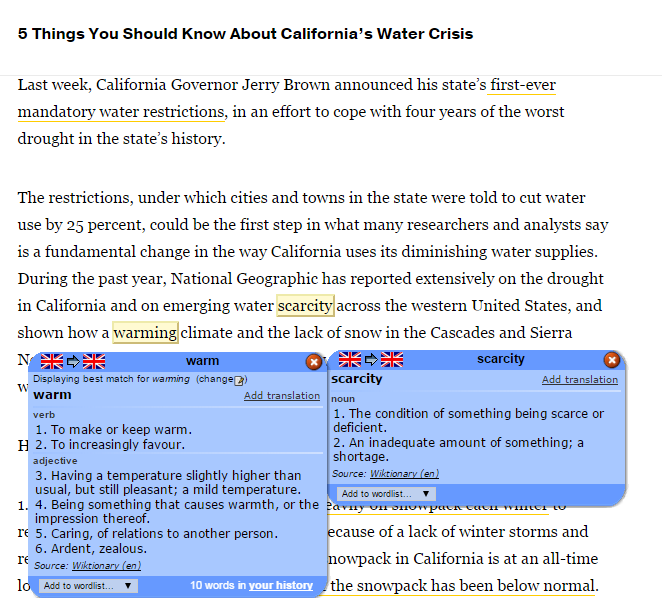 You can notice that I selected (I clicked the left mouse button) “warming” and “scarcity” .
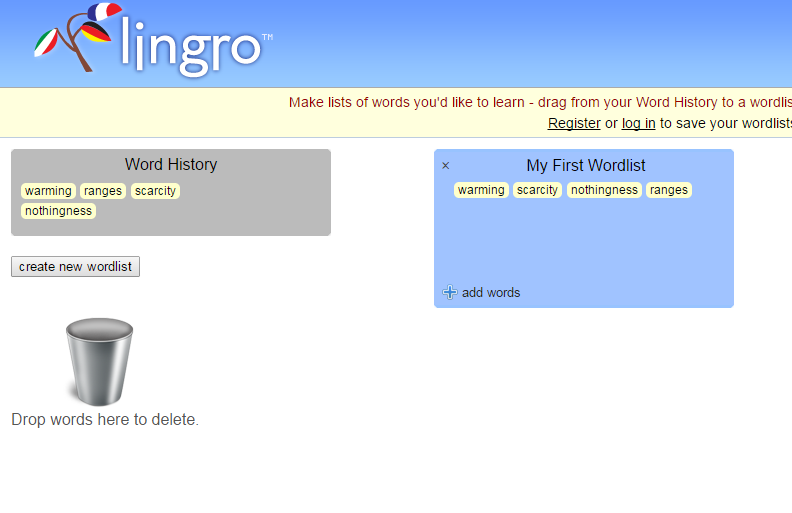
Afterwards, you can study the words you didn’t know. There’s the possibility to create wordlists:
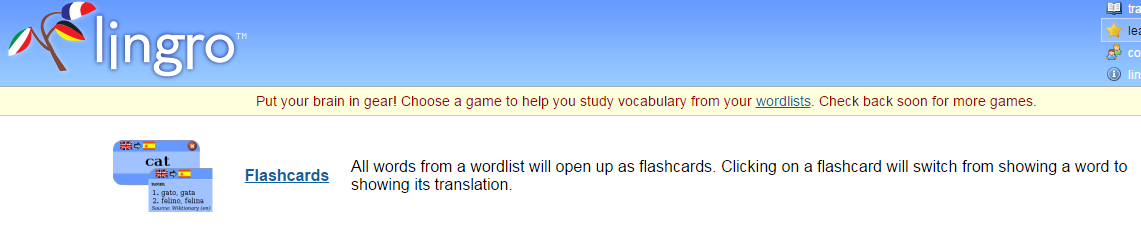
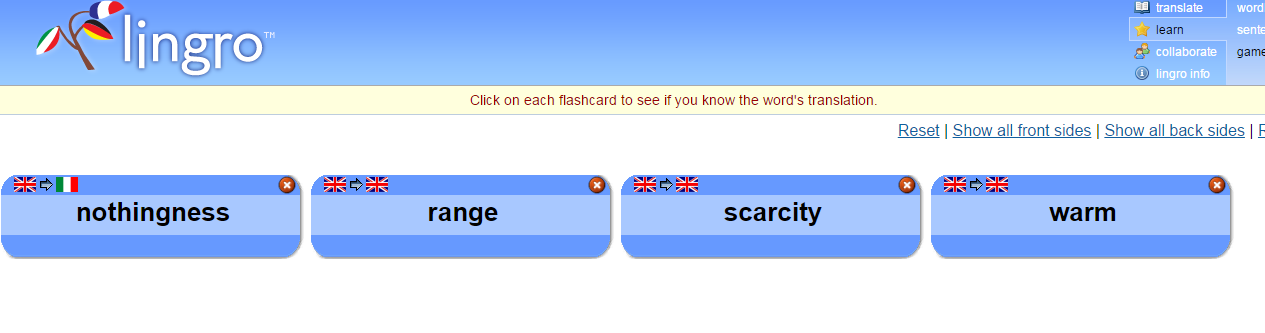
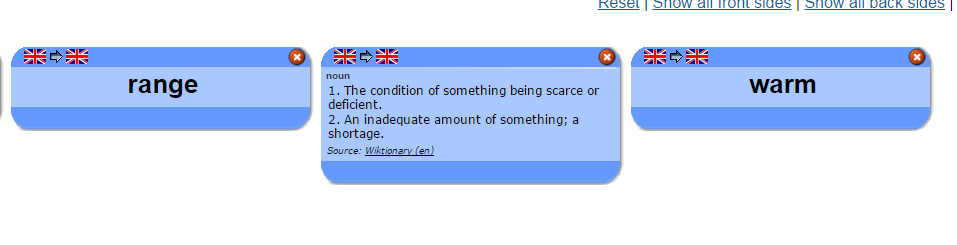
You can also play with flashcards:
“Hands down” – English idiom

 Free English Materials For You