Some advice for you, before talking about translation in context and online corpus.
1. If you are learning English and you want to boost your vocabulary, I suggest that you write down every day all the new words you’ve learned. By doing so, it will be easier for you to quickly review all of them. If you don’t want to write them down, just use an online tool like Memrise (with this “tool” you can make quizzes with the words/sentences/expressions you want to learn) or Anki (if you want to make flashcards).
2. You should review every evening/morning all the words you’ve learned that day or the previous one. Then, on the weekend, you should review what you’ve learned during the week, and so on.
In my opinion, if you write only a list of terms, it won’t be possible for you to memorize them. You need to learn that term through context, with an example sentence. It’s way easier to remember a word meaning through context than by itself. Context is at the foundation of vocabulary acquisition.
Online there is a variety of free tools which you can use (ex. Reverso, Linguee, or Glosbe). Remember that words rarely have just one meaning, so it will be frustrating for you to learn words from a list if you don’t write an example sentence for each one of them. What you need to do, if you haven’t done it yet, is to use words you want to learn in context. You need to write down the term and an example sentence.
It’s not just about remembering a word. You must be sure when you use a word that you are doing it right. Maybe you learned a word out of context and you are not sure about how and when to use it. In this case, translation in context would really help you. What you need to learn is how native people use the language; how they use the word you want to learn. It’s not just about grammar. You can say something that is grammatically correct, but are you sure that a native speaker would use the same term? Check it up! You need to learn which option is more common in speaking and which one is more common in writing.
Practical examples:
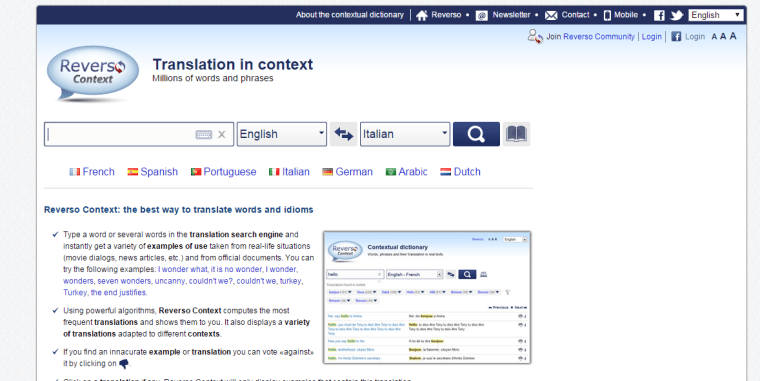
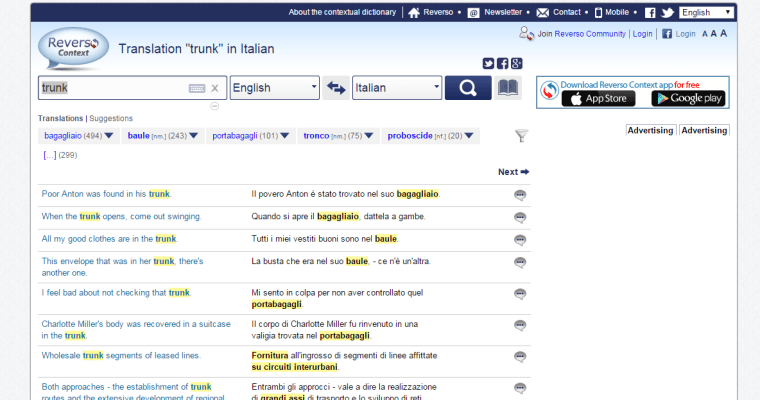
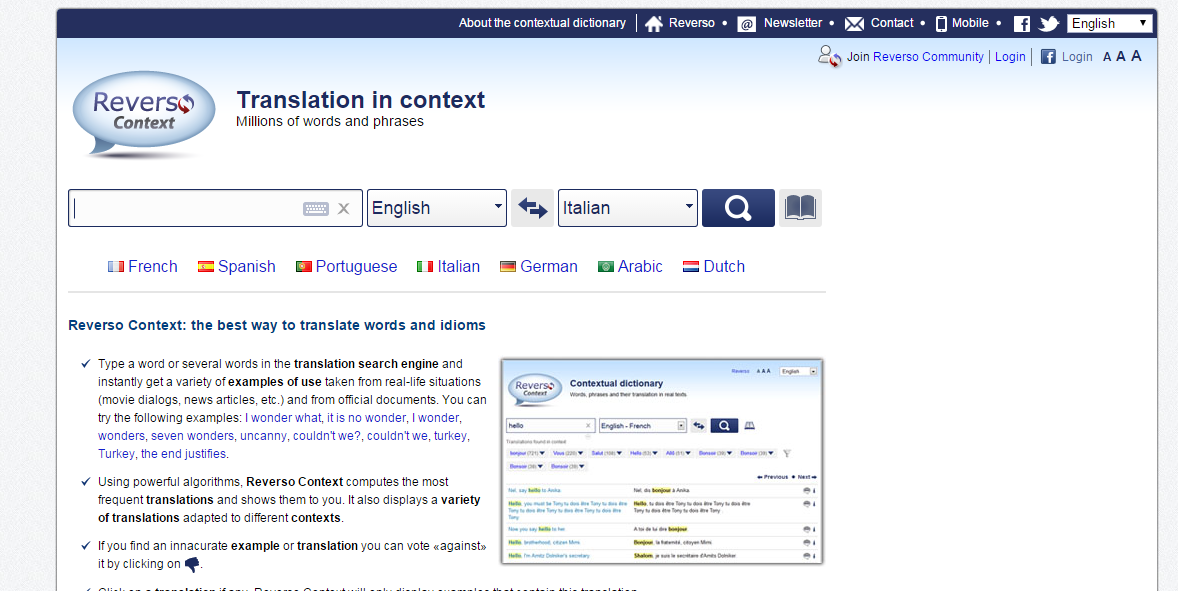
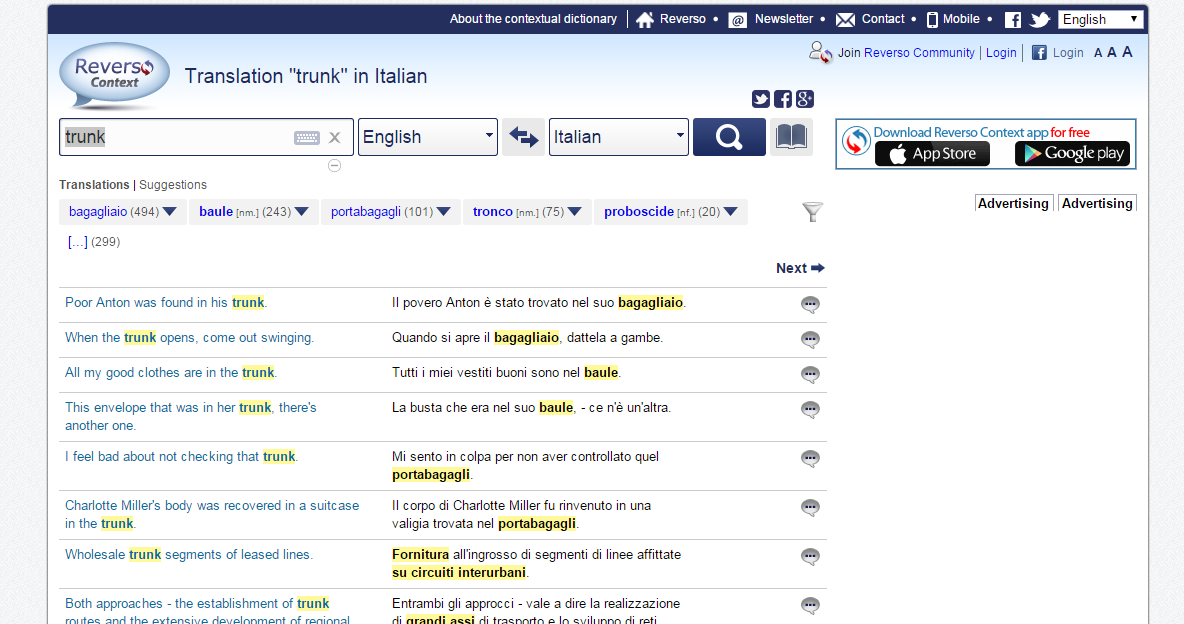
REVERSO
If you search “trunk” (English-Italian), this appears on your screen:
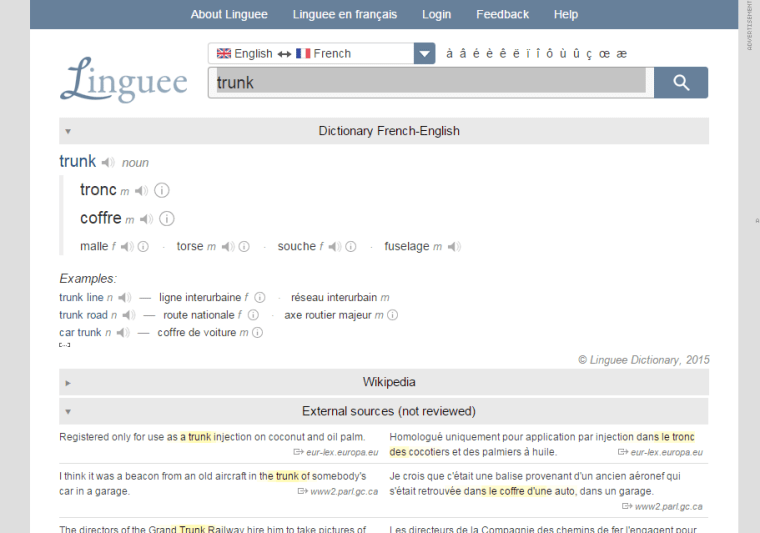
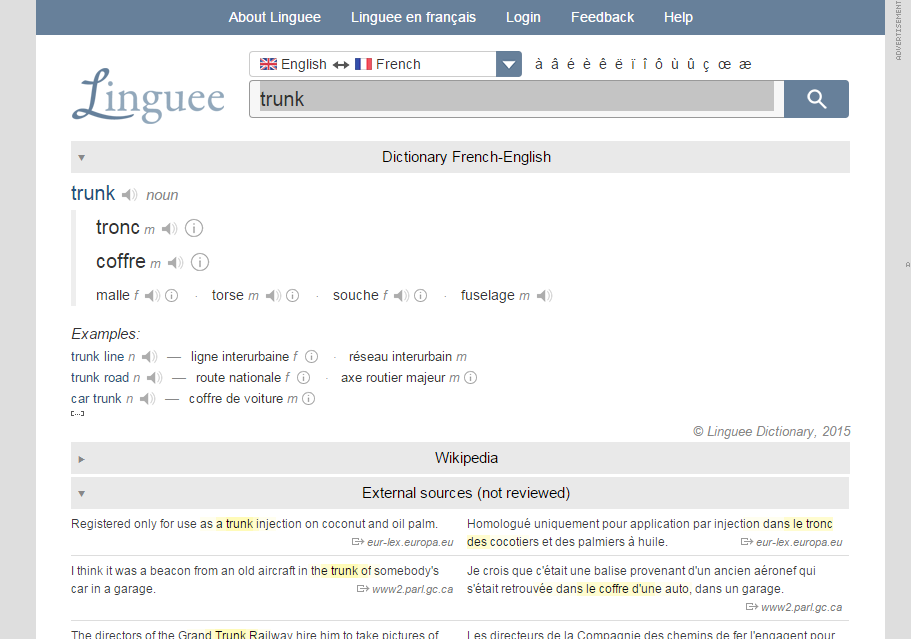
 LINGUEE (“trunk” English-French)
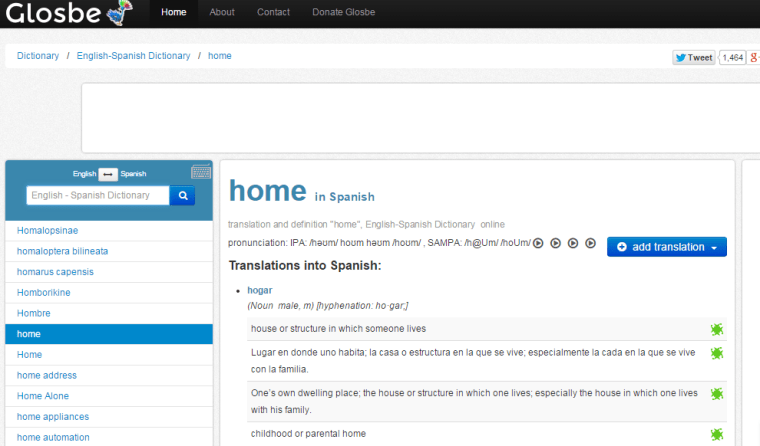
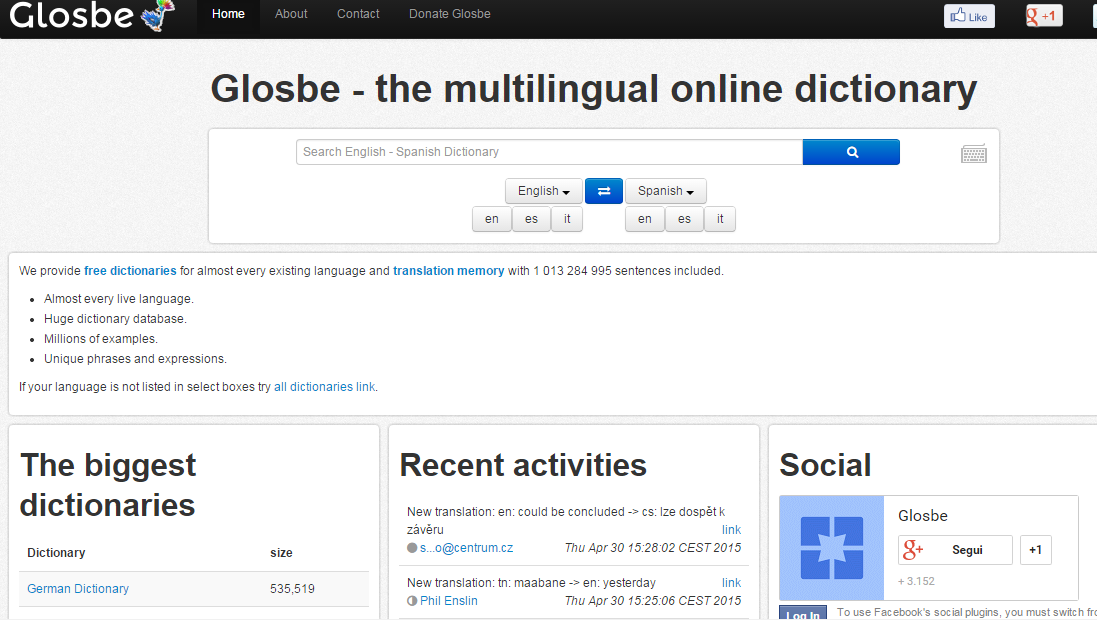
GLOSBE
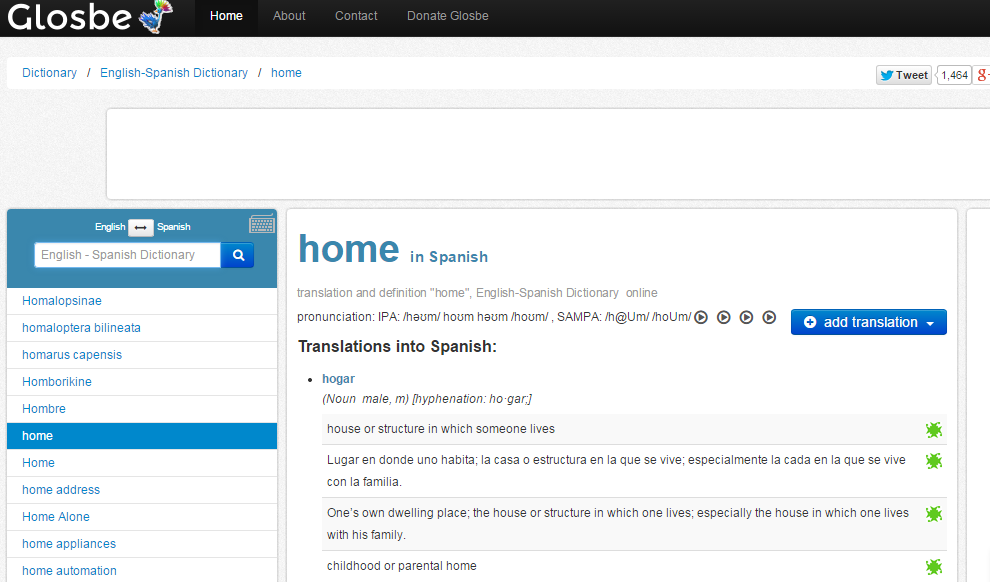
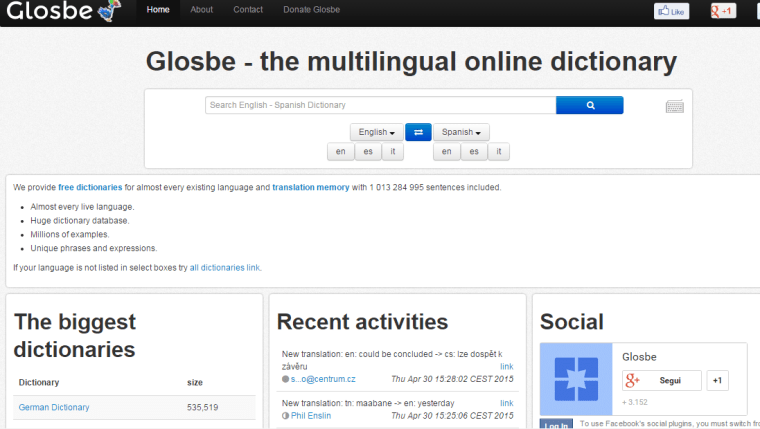 This time, I chose the English-Spanish dictionary, and I looked for the term “home”:
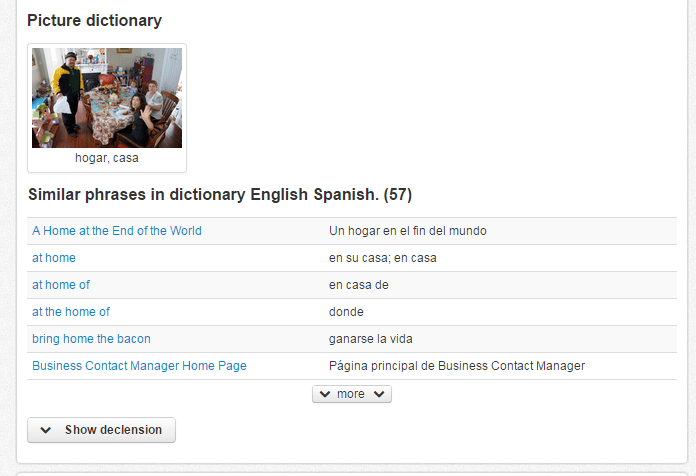
 Glosbe has also a picture dictionary:
Scrolling down a little bit, you can find this:
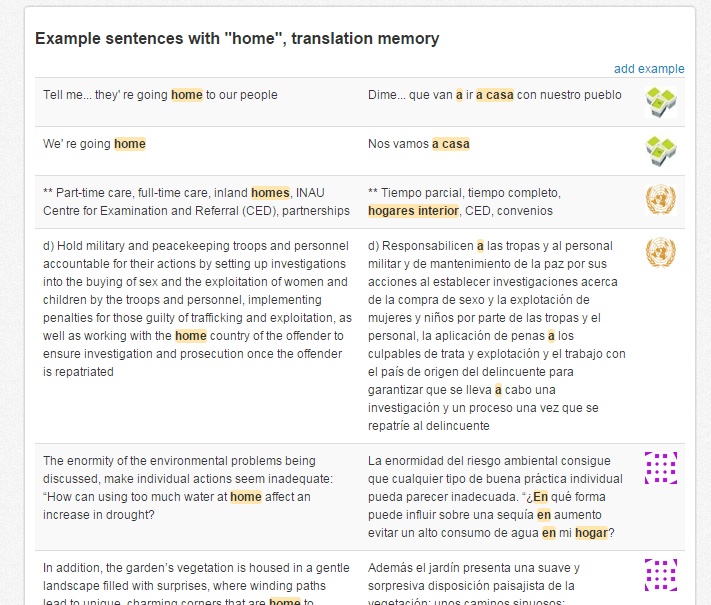
For Intermediate students, another way to learn English terms is by using the online corpus.
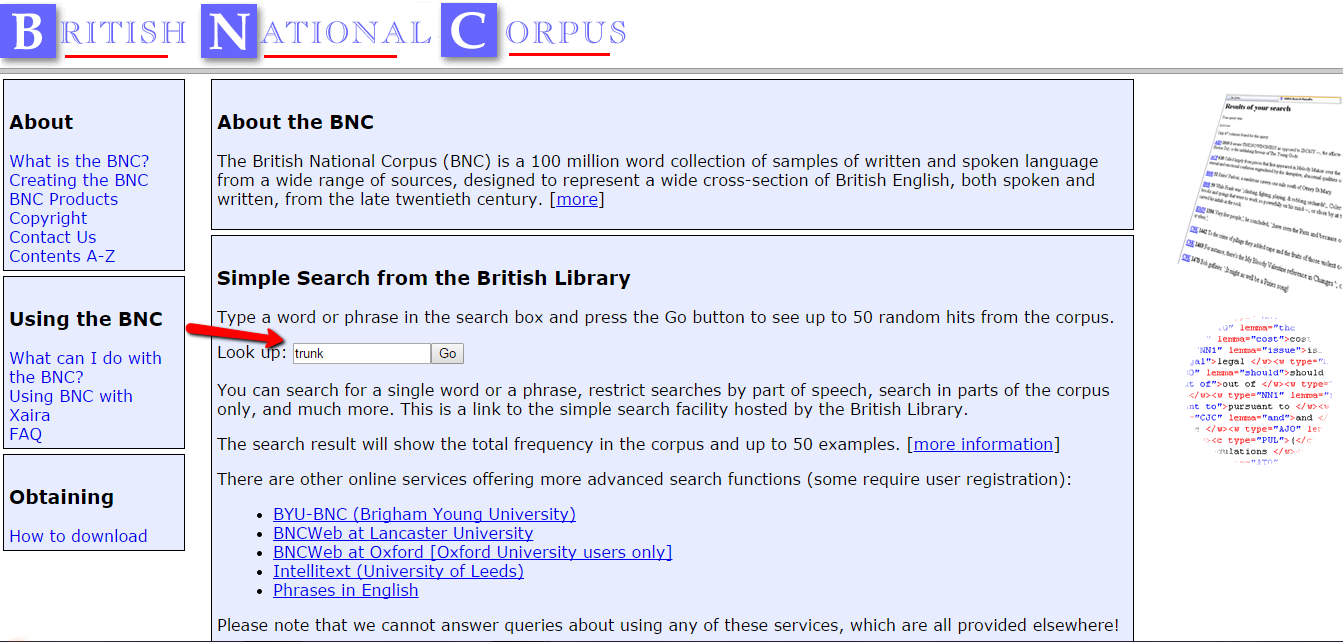
BRITISH NATIONAL CORPUS
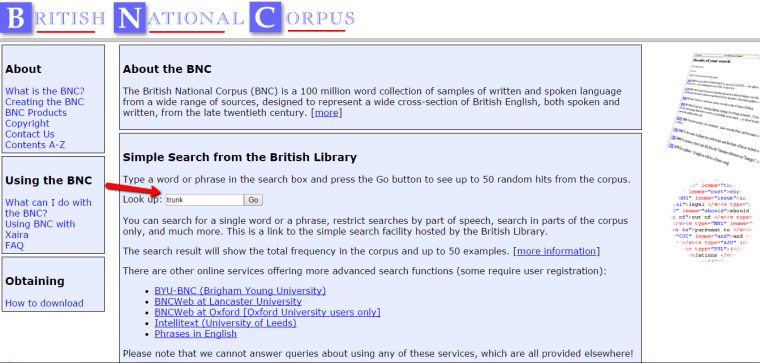
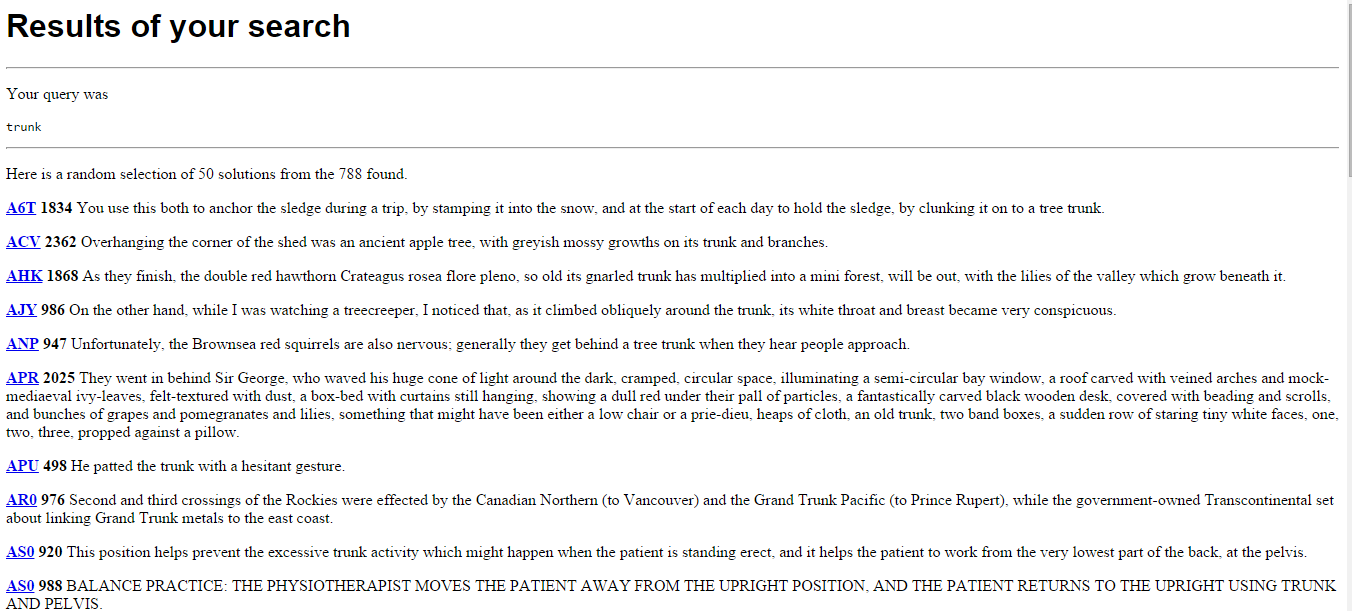
As you can see, I looked up the word “trunk” (once again 😉 ). This is what I found out about it with this tool:
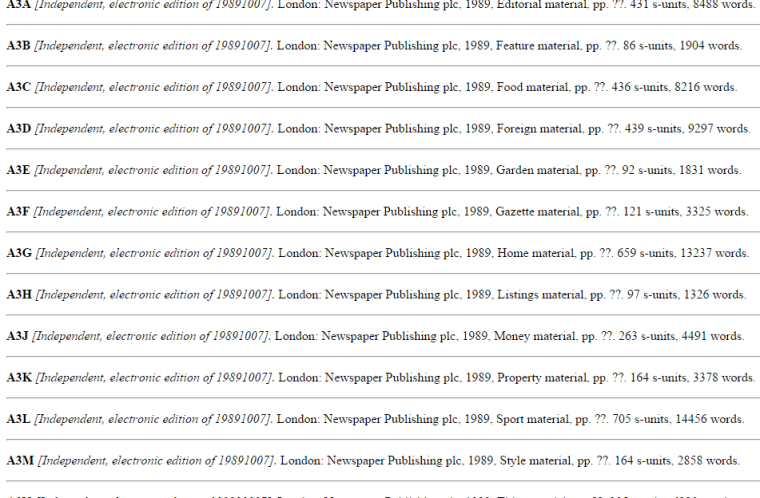
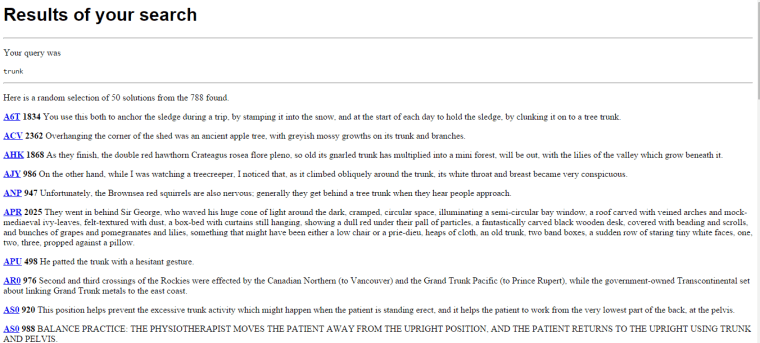 As you can see, I found a lot of example sentences. By clicking on the words written in blue, you can find out where the sentence is from.
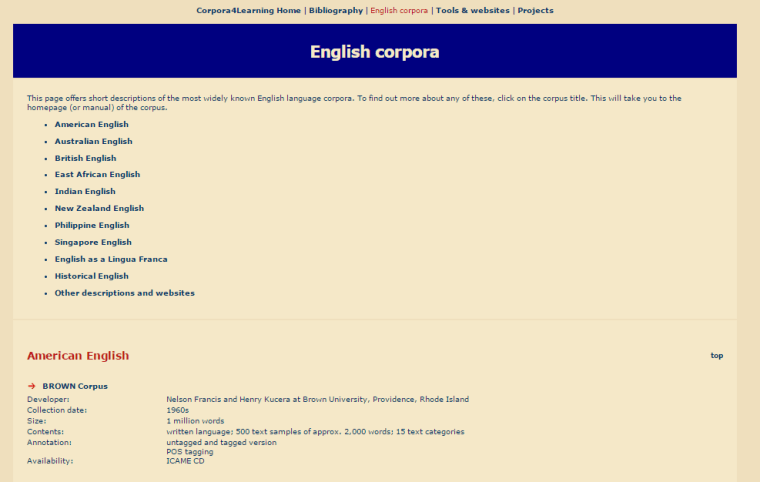
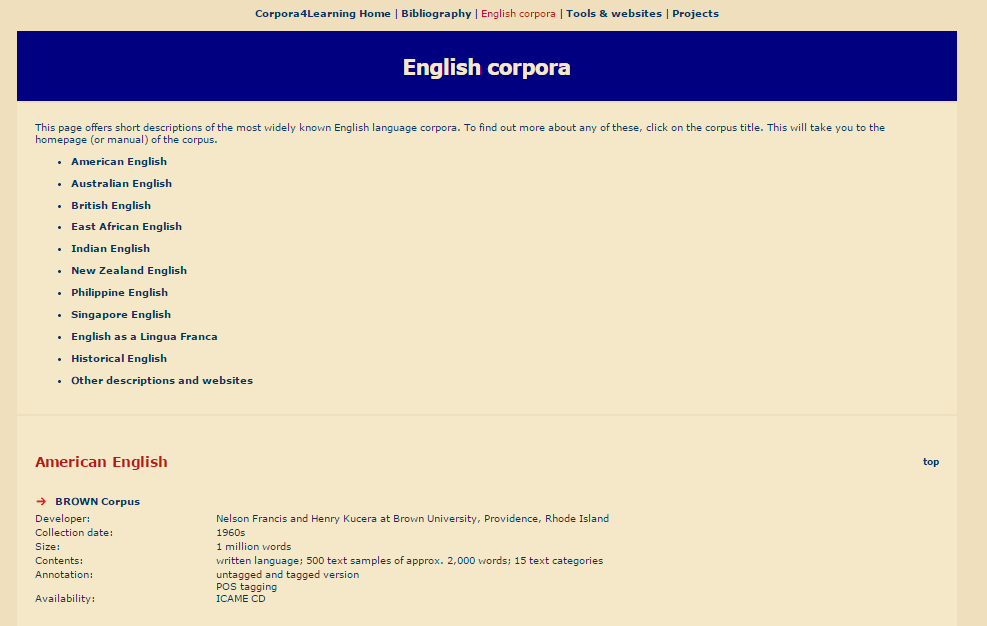
 I found out about British National Corpus here: CORPORA4LEARNING
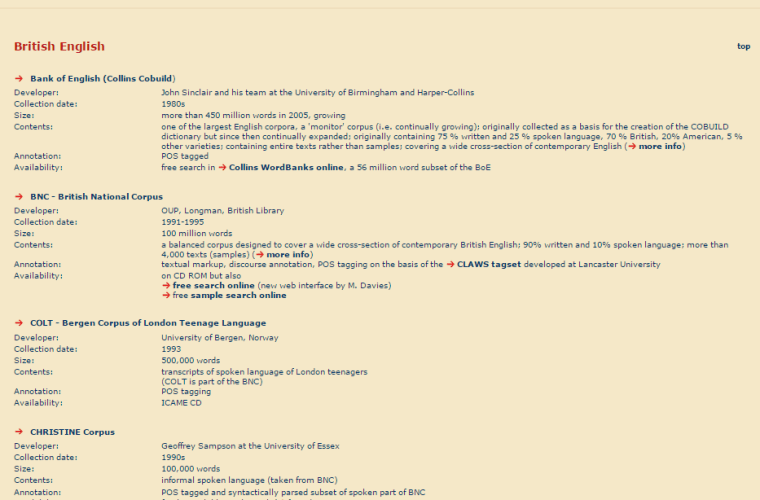
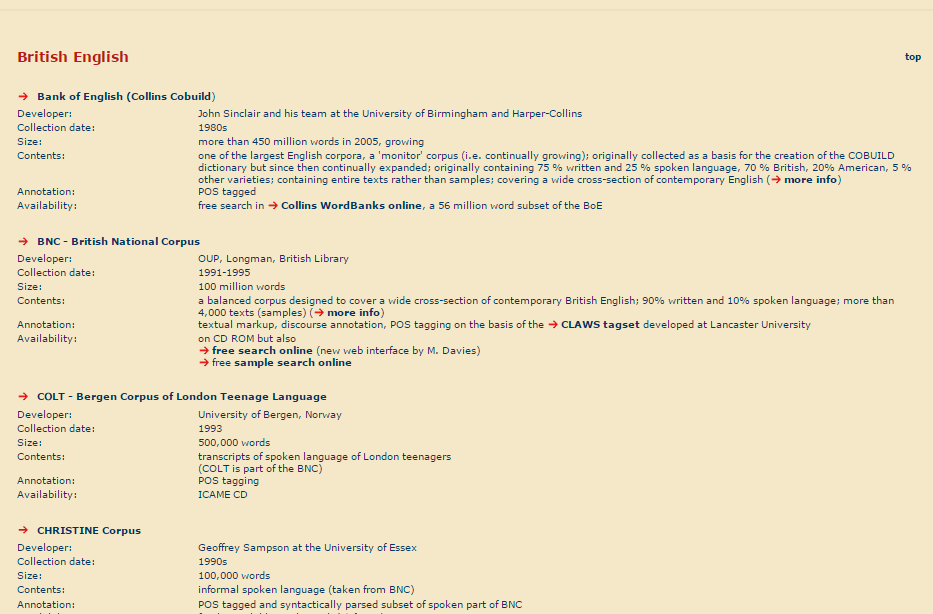
Selecting “British English”:
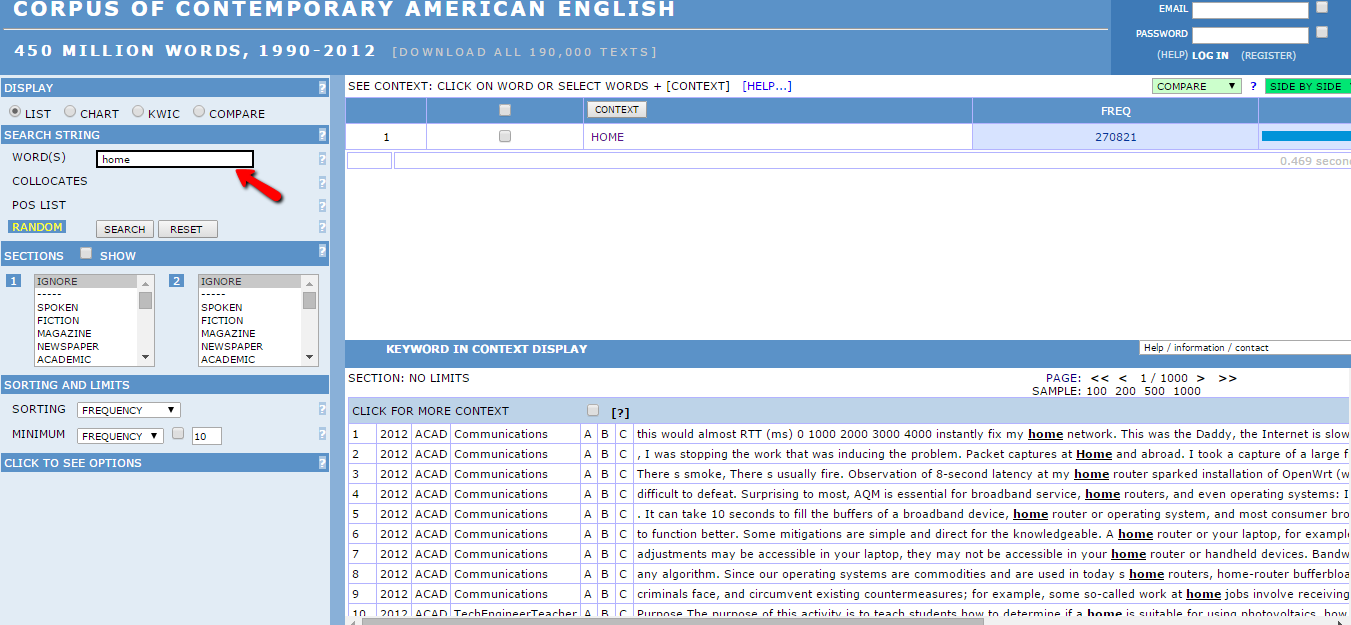
 Of course, in the same website you can choose another corpus, like the Corpus of Contemporary American English.
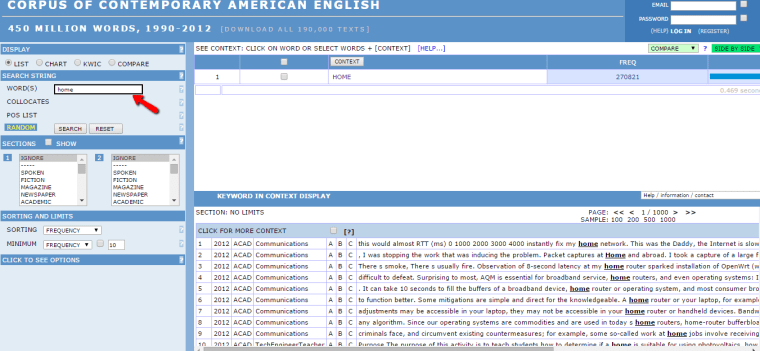
You are allowed to select a filter (ex. spoken/fiction/newspaper/academic) which is amazing if you need to know if a word is used in a particular context. If you search “home”:
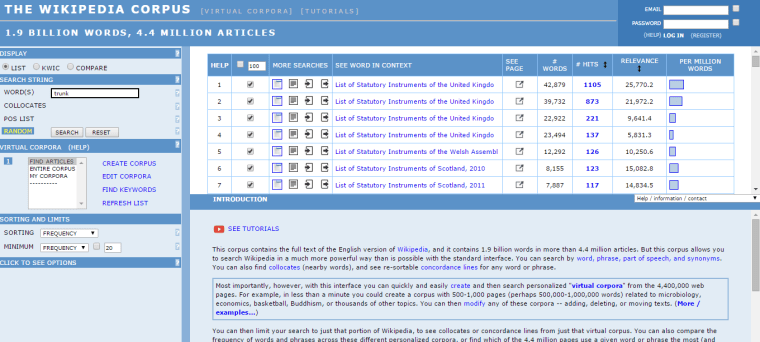
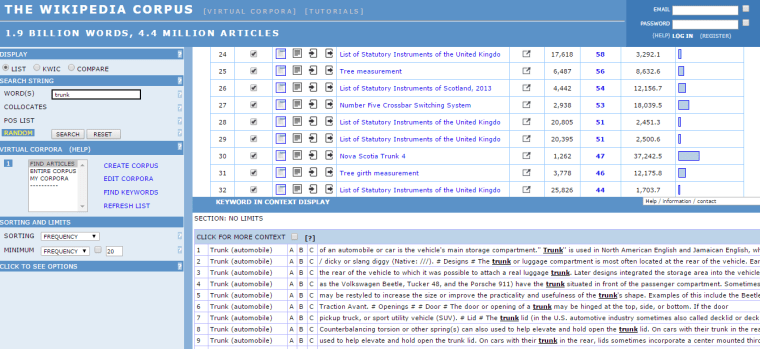
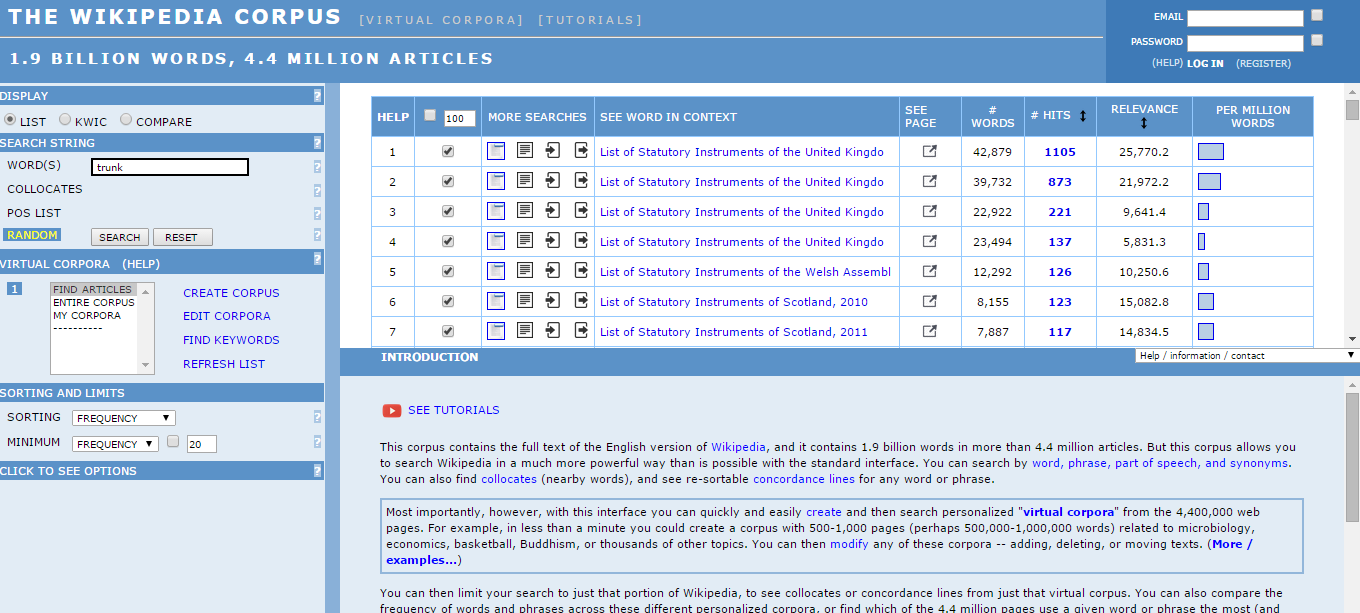
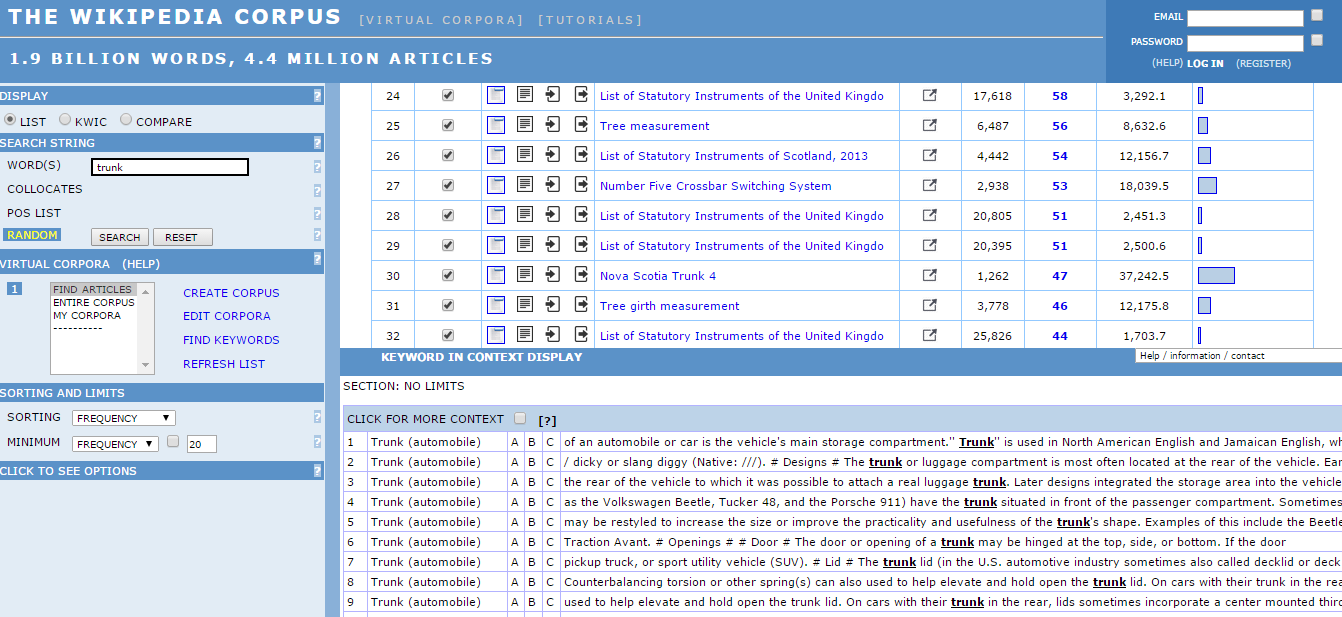
 Wikipedia has an online corpus too: http://corpus.byu.edu/wiki/.





 Free English Materials For You