
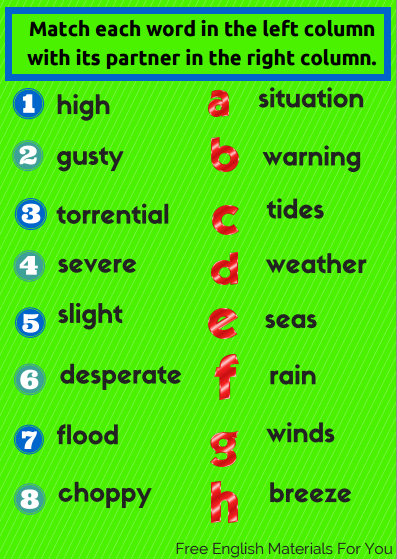
To play cat and mouse with (someone) – English idiom
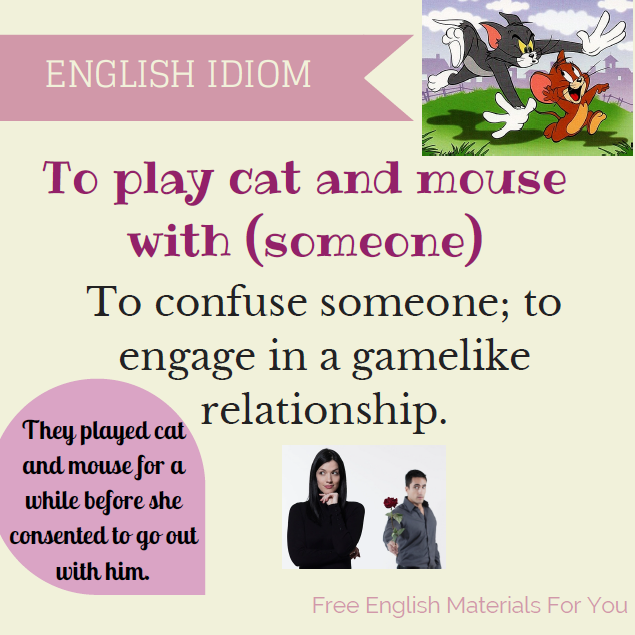 Example sentences from the web:
- The man is playing cat and mouse with his company about his plans to quit or not.
- She loved to play cat and mouse with an admirer, acting by turns friendly, indifferent, and jealous.
- The actor spent all the week playing cat and mouse with the press.
“Dependable” – What does it mean?

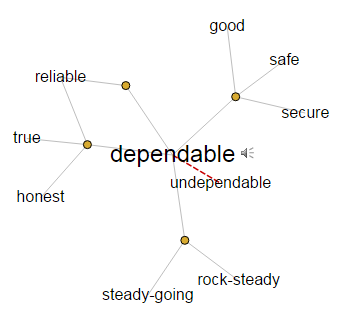
Example sentences from the web:
- Bobby is a dependable dog, always by my side.
- He is loyal and dependable and valued by all his co-workers.
- The pigeon’s name is Sofia, and she’s a friendly and dependable creature.
“Knowledge, like air, is vital to life. Like air, no one should be denied it.” – Alan Moore

Geography – Visual vocabulary
Pro Ace’s video on GEOGRAPHY – VOCABULARY:
Here more terms, for intermediate and advanced English students (video made by London English Classes):
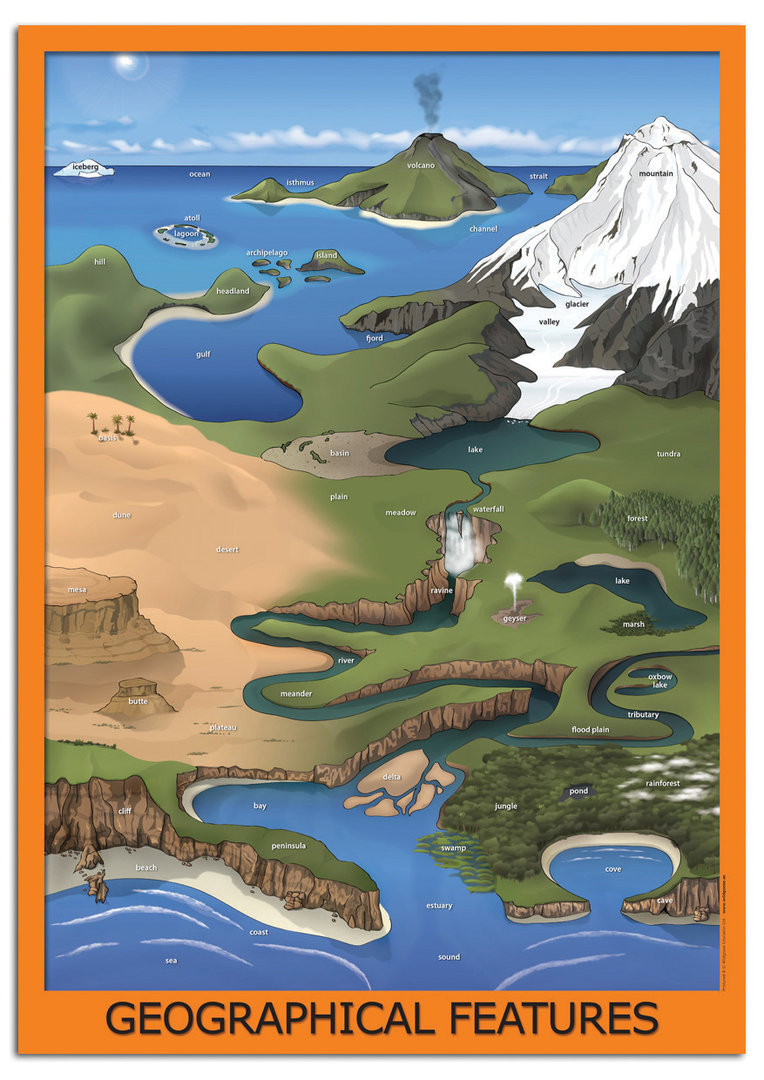
Click here to play hangman games on this topic: game
How to express emotions/feelings in English – (for beginner and intermediate English students)

How to express feelings in English (for beginners) – PRO ACE’s video
How to express emotions in English (for beginners) – Shaw English Online’s video:
Expressing feelings in English (for Intermediate English students) – ESLEnglishFaby’s video:
“To waffle” – British slang
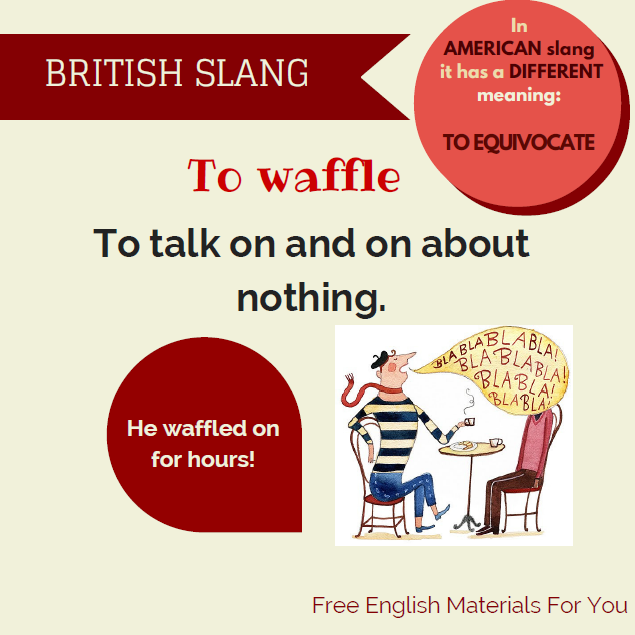
Probably you knew already the common meaning of “waffle” in British and American English. If you didn’t … this is a “waffle”:

A “waffle” is a type of pancake with a pattern of square dents in it, made in a waffle iron.
According to Random House Dictionary waffle with the British English meaning of talking idly, and foolishly without purpose is derived from waff (which means to bark or to yelp like a dog) and first appeared in print between 1695-1705.
Example sentences from the web:
- She waffled when asked what she thought of her sister’s new boyfriend.
- If you don’t know the answer, it’s no good just waffling (on) for pages and pages.
From a British newspaper clipping (1957):
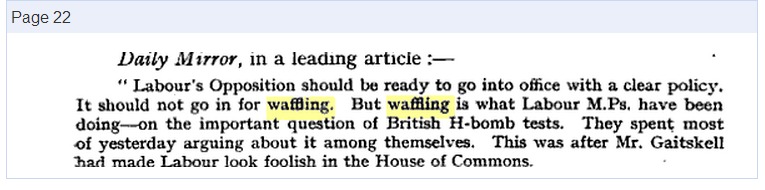
Remember that in American slang the meaning of “to waffle” is different.
Example sentences from the web:
- American voters waffled in 2000.
- He waffled on an important issue.
[= to fail to make up one’s mind; to equivocate; to waver; to oscillate between options].
Quiz on vocabulary – for advanced English learners
Fill in the gaps in the sentences. Use a dictionary if necessary.
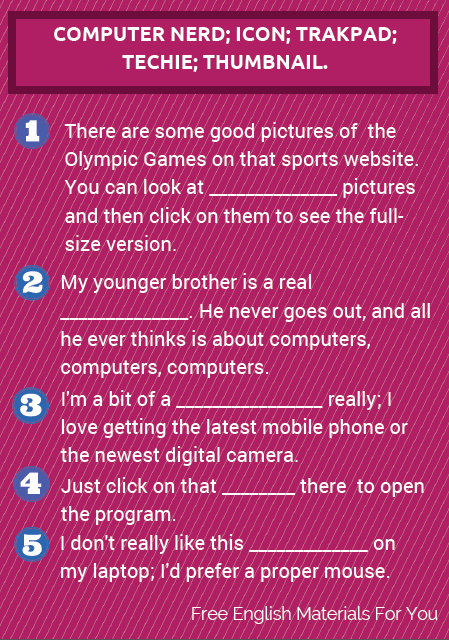
McCarthy, M., O’Dell, F. (2006), English Vocabulary in Use, Cambridge: Cambridge University Press, p. 139.
Tomorrow the answers will be available on Facebook: Free English Materials
(Album: Quizzes’ answers).
“Being deeply loved by someone gives you strength, while loving someone deeply gives you courage.” – Lao Tzu

“To be a big fish in a small pond” – English idiom
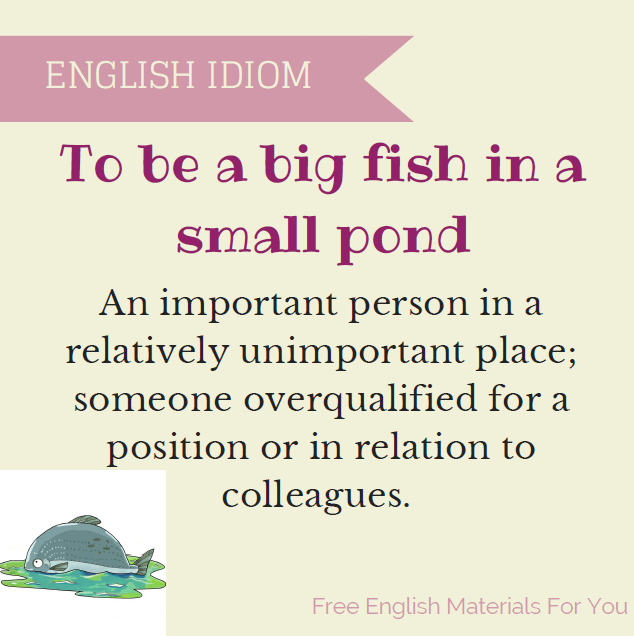
Example sentences from the web:
- As long as you stay, you’re a big fish in a small pond… …and can blame everyone for holding you back.
- Steve has both a Ph.D. and an M.D., yet he’s content with his practice at a rural hospital; he prefers to be a big fish in a little pond.
- I’ve got to get out of this town. It’s just too small. I’m tired of being a big fish in a small pond. I want to move to a big city like New York or Los Angeles.
NOTICE that this idiom could be used with a different meaning, referring to someone who is important in a small group or organization, but who won’t be so important in a larger one.
- “If he is such a great actor, why doesn’t he move to New York City?”
Reply: “He likes being a big fish in a small pond.”
This idiom is explained very well here: http://painintheenglish.com/
“For example, a man started his own heating / air conditioning repair company. He had 4 locations and a fleet of 10 trucks. He was a prominent businessman in the community and his business netted $1 million per year. In a town of 25,000 people, he was in the top 1% of incomes and because he brought so much money into the community, he had a certain leverage with the city council. They would be very careful to allow building permits near his businesses without checking with him first.
However, if that man moved to a large city, for example: New York City, then 4 locations, 10 trucks, $1 million / year would not be special at all. For a small town (pond), he had a big business (he was a big fish), but in a large lake (New York City), he was a much smaller business (much smaller fish) by comparison”.
 Free English Materials For You