Past simple – quiz

Fill in the gaps with the past simple form of the verbs in brackets:

1. You and Sally _________ not a school yesterday. (to be)
2. Uncle Conrad_________ to catch his bus. (to hurry)
3. Two doctors _________ into the room. (to rush)
4. I ________ Jesse in the park. (to meet)
5. Mozart ________ more than 600 pieces of music. (to write)
6. I __________ to the cinema two times last week. (to go)
7. When did Mr Black _______? (to die)
8. She _________ happy. (to feel)
9. He _________ his hair yesterday. (to cut)
10. Brenda __________ 20 books last year. (to read)
11. Our neighbour _________ his door open by accident. (to leave)
12. My boyfriend __________ back from the war last month. (to come)
13. Our horses __________ a lot yesterday. (to eat)
14. I __________ to lock the door.(to forget)
15. The queen __________ for her servant. (to ring)

I suggest that you take a look at this post if you need to review this topic ;-): irregular verbs.

These are the correct answers:

1. hurried, 2. rushed, 3. met, 4. wrote, 5. went, 6. die, 7. felt, 8. cut, 9. read, 10. left, 11. came, 12. ate, 13. forgot, 14. rang

Downloadable PDF: Quiz on past simple (without answers)

Downloadable PDF: Quiz on past simple (with answers)


What is the Zika Virus? – vocabulary, video, and exercises with answers.

I suggest that you read this list of words you may not know before watching the video.

VOCABULARY

To spread : to become larger or to affect a large area.
Ex. The fire spread through the six-storey building via the single staircase which acted as a chimney.

To detect : to discover or ascertain the existence.
Ex. 
Irregularities were detected on seven of the websites.

To break out : if something dangerous or unpleasant breaks out, it suddenly starts.
Ex. 
War broke out in 1914.

To transmit : to give or pass from one person to another; to cause (a virus, disease, etc.) to be given to.
Ex. 
Hepatitis C is a life-threatening viral disease transmitted primarily by blood contact.

To link : to make a connection between two or more things, ideas or people.

Paralysis : a condition in which you can’t move or feel al or part of your body.

Spike : a very high level.

Outbreak : a sudden increase, rise.

Mild : not strong in action or effect.

Vaccine : a substance injected into a person or animal to protect against a particular disease.

Downloadable PDF: What is the Zika Virus – vocabulary

Answer the following questions:

  1. How many people could be affected by Zika virus this year?

  2. Where was it discovered and when?

  3. Where did it break out in 2015?

  4. How is this virus transmitted?

  5. What are some of the effects of Zika virus?

  6. Is there a treatment for this virus?

  7. When could be ready a vaccine against Zika virus?

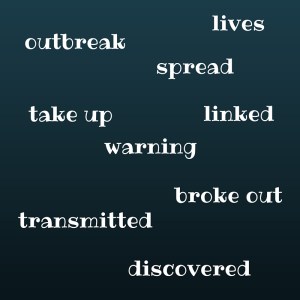
Fill in the gaps with the correct word from the box.

fill in the gaps


  1. Zika virus could _________ tofour million people this year.

  2. It was ____________ in Uganda in the 1940’s.

  3. It ______________ in the Americas and the Caribbean in 2015.

  4. Zika is _______________ through a particular species of mosquito that ______________ mostly in tropical regions.

  5. Zika has been _______________ to paralysis and birth defects.

  6. Officials are now _____________ pregnant women not to travel to places where there is an active Zika ___________.

  7. Officials say finding a vaccine could _____________ to a decade.

Downoadable PDF: What is the Zika Virus – exercises

Downloadable PDF: What is the Zika Virus – correct answers


“Awkward” – What does it mean?

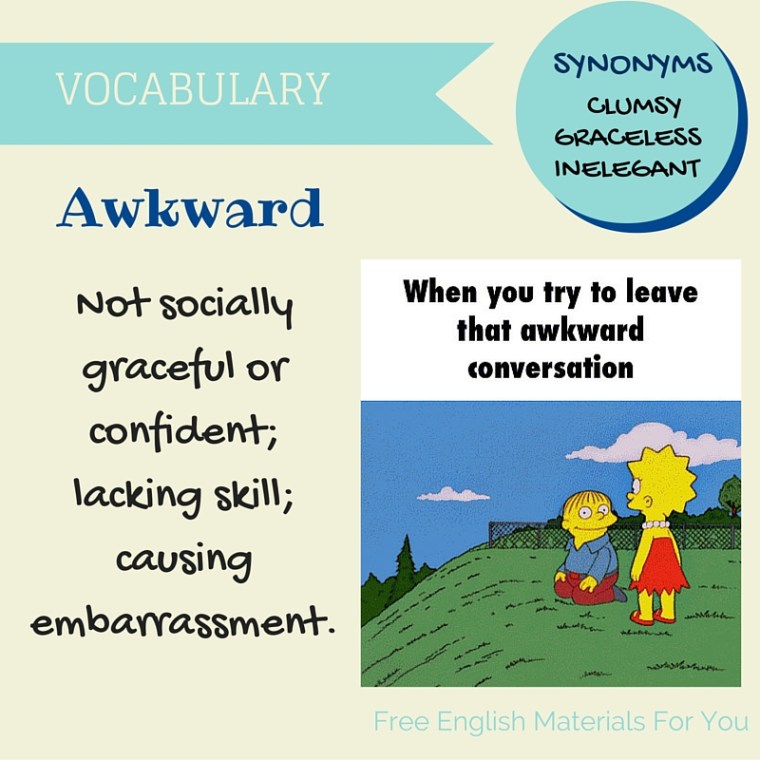
AWKWARD MEANING - English vocabulary.jpg

Image source

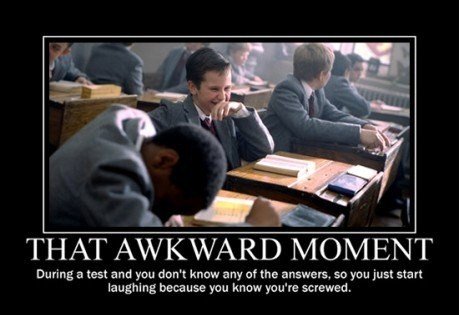
that awkward moment.jpg

Gif source

I'm so awkward.gif

Gif source

Example sentences from the web:

  • I often find our awkward silences more comfortable than our awkward conversations.
  • It would be awkward to show him you’ve rejected me.
  • She is awkward at dancing.

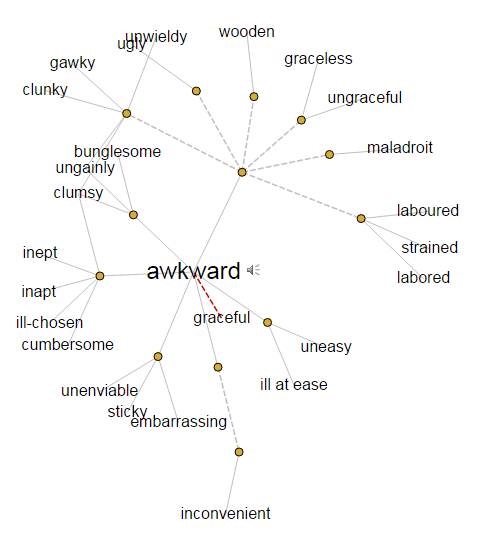
Synonyms for AWKWARD:

awkward thesaurus

Visual thesaurus

Who invented the Internet? And Why?

VOCABULARY

Creditpraise or special attention that is given to someone for doing something or for making something happen.
Example: She got no credit for solving the problem.

To threaten: to tell someone that you will kill or hurt them or cause problems if they do not do what you want.
ExampleThey threatened the boy with a gun.

Geek: meaning.

Myriad: a very large number of things.

Mainframe: a large and very fast computer that can do many jobs at once.

*Interesting article on this topic: The First Mainframe .

Behemoth: something very big and powerful.

Packet switching:  a digital networking communications method that groups all transmitted data into suitably sized blocks called packets.

Congestion: too blocked or crowded and causing difficulties.
Example: Yesterday, there was a traffic congestion

Gateway: a hardware device that acts as a “gate” between two networks.

To spread: to open, arrange, or place (something) over a large area.
Example: The fire spread very rapidly because of the strong wind.

Steadily: not changing much.

Retail: the sale of goods in small quantities directly to customers.

Downloadable PDF: Who invented the Internet – Vocabulary

Verb tenses review

Fill in the gaps with the correct form of the verbs in the brackets:

  1. So, have you ever _____________ (to wonder) who actually _____________ (to invent) the Internet?
  2. Or _________ (to be) it thanks to a myriad of smart scientists ________________ (to work) on something they __________ (to know) _____________ (to be)  useful but _______________________ (to realize – negative form) would be so big?
  3. One popular but wrong story ________ (to be) that the internet ________________________ (to develop) by the USA so they ___________ (to have) a communication network that would survive a nuclear war.
  4. With time-sharing, these behemoths could ______________ (to process) several tasks at a time, which _____________ (to mean) their power could be used by several scientists at once.
  5. And, obviously, once you _________________ (to start) ___________________ (to connect) computers together you ________________ (to start) to wonder about what you ________________ (to need)to do to make communications between them easier.
  6. The French also _______________ (to play) a role. They _________________________ (to work) on a scientific network called CYCLADES, but they ______________ (to have – negative form) a big budget, so they ________________(to decide) to work on direct connections between computers, as opposed to working with gateway computers.
  7. The TCP/IP protocols _______________ (to form) the basic communication language of the internet, which _______________ (to label) the packets of data and ________________(to make) sure that even though some pieces of the same data ____________________ (to take) a different route, they all _________________ (to arrive) at their destination and can be reassembled.
  8. Networks really ________________ (to begin) ________________________ (to communicate) with each other in 1975, so you could _______________ (to argue) that __________________ (to be) the beginning of the internet.
  9. Most internet traffic in 1976 _____________ (to be) email, because academics ____________________ (to think) electronic post-it notes ______________ (to be) dead-core.
  10. He _____________ (to do) so by __________________ (to invent) an interface _________________ (to use) HTTP, HTML, and URLs that _________________ (to make) internet browsers possible.

Downloadable PDF: Who invented the Internet – fill in the gaps activity

Correct answers: Correct answers – Fill in the gaps activity – Who invented the internet


Visual vocabulary 6

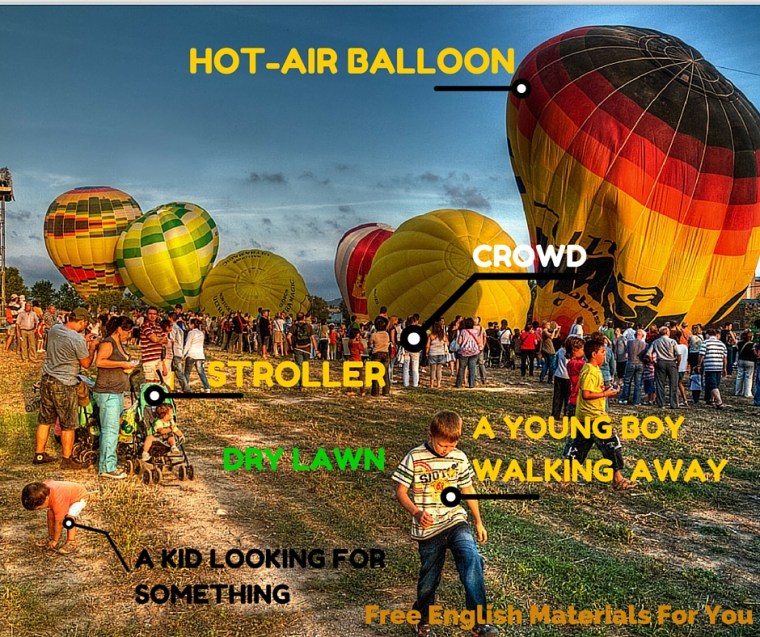
VISUAL VOCABULARY (1).jpg

Photo credit: Paco CT via Foter.com / CC BY-NC-SA

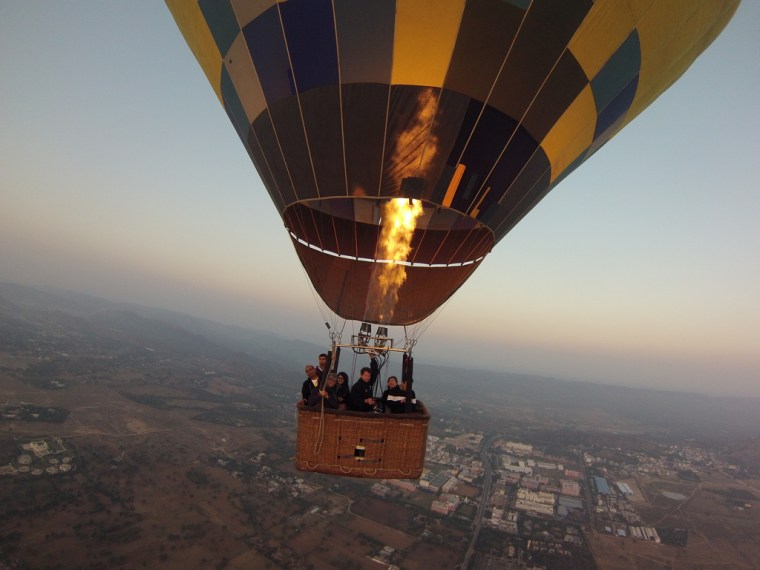
HOT-AIR BALLOON =>  a lighter-than-air craft in which air heated by a flame is trapped in large fabric bag. Hanging under the balloon, there is a basket (container) in which people can ride.
In this picture, you can notice that there are seven people in the  basket and the flame is visible because they are flying:

Hot-air balloon

Photo credit: Arun Katiyar via Foter.com / CC BY-SA

The first hot-air balloon was created in 1783 by two brothers, Joseph-Michel and Jacques-Ètienne Montgolfier. 

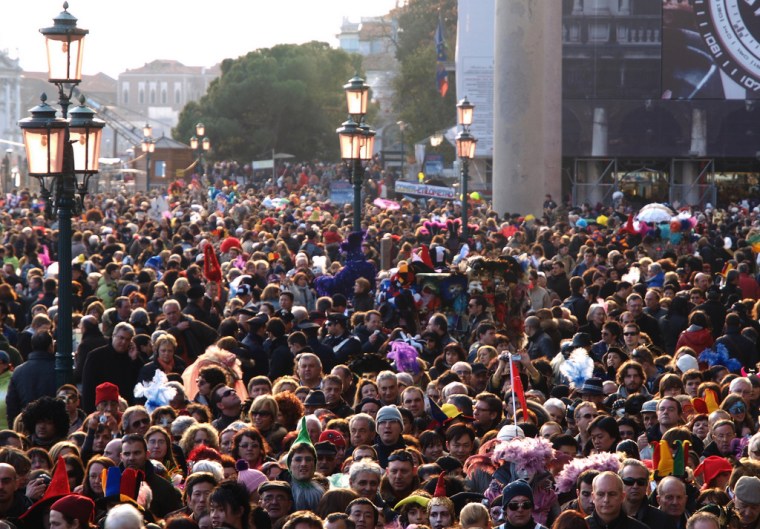
CROWD => a large group of people. This is a crowd:

Crowd meaning.jpg
Photo credit: mararie via Foter.com / CC BY-SA

LAWN => grass-covered land.
In this picture, the lawn is dry, probably because it didn’t rain for a while (the grass isn’t green).

dry lawn.jpg
Photo credit: mugley via Foter.com / CC BY-NC-ND

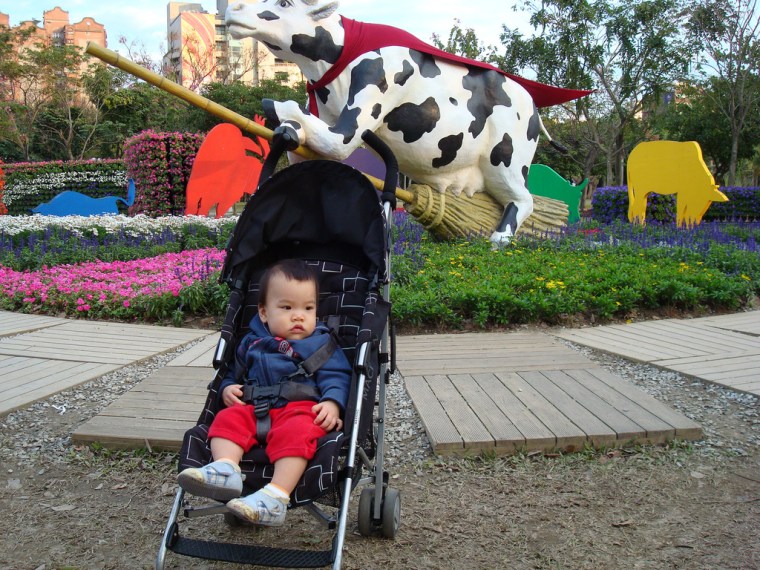
STROLLER => a small carriage with four wheels that a baby or small child can ride in while someone pushes it.

Stroller mening.jpg

Photo credit: alberth2 via Foter.com / CC BY-SA

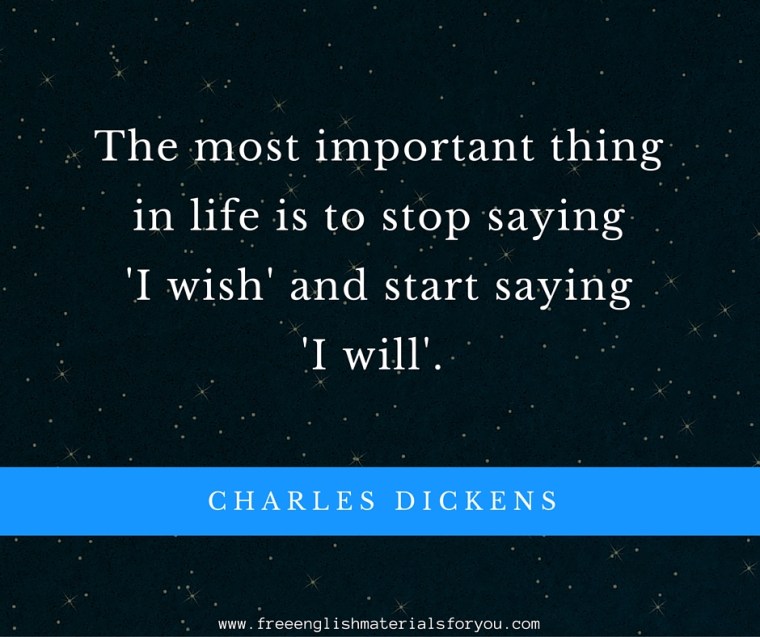
“The most important thing in life is to stop saying ‘I wish’ and start saying ‘I will’.” – Charles Dickens

Charles Dickens' quote.jpg

Charles Dickens is one of my favorite writers. This quote is taken from his most autobiographical novel David Copperfield, published as a serial from 1849 to 1850.

If you want to read this book, you can find it here: David Copperfield by Charles Dickens.

Irregular verbs

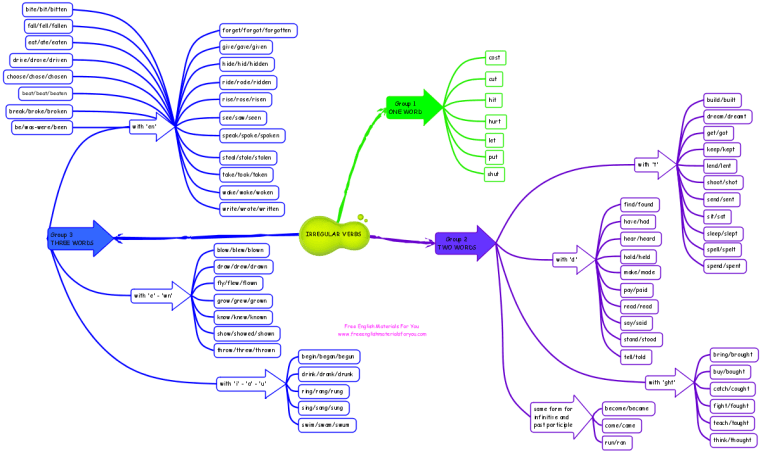
It’s since a while that I am not uploading posts on grammar. In my opinion, for a beginner is not so easy to memorize irregular verbs, that’s why I decided to make mind maps and other resources on this topic. I hope you’ll find it useful.
Irregular verbs in English - mind map

You can download this mind map on Biggerplate (imx file). If you don’t have the possibility to open this kind of file, just download the image from Free English Materials’ Facebook Page (Album: Mind maps)

Since there are a lot of irregular verbs I decided to make smaller mind maps for each single group. In this way, it will be easier for you to read them.

Group one - one word

GROUP 1 – ONE WORD

  • cut
  • cost
  • hit
  • hurt
  • let
  • put
  • shut

Group two- two words

GROUP 2 – TWO WORDS

  • WITH ‘T’

    build/built
    – dream/dreamt
    – get/got
    – keep/kept
    – lend/lent
    – shoot/shot
    – send/sent
    – sit/sat
    – sleep/slept
    – spell/spelt
    – spend/spent

  • WITH ‘GHT’

    bring/brought
    – buy/bought
    – catch/caught
    – fight/fought
    – teach/taught
    – think/thought

  • WITH ‘D’

    – find/found
    – have/had
    – hear/heard
    – hold/held
    – make/made
    – pay/paid
    – read/read
    – say/said
    – stand/stood
    – tell/ told

  • SAME FORM FOR INFINITIVE AND PAST PARTICIPLE

    become/became
    – come/came
    – run/ran

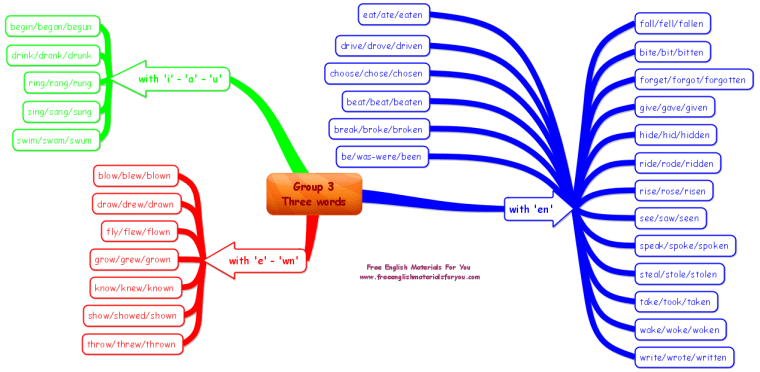
English Irregular Verbs - Group 3.png
GROUP 3 – THREE WORDS

  • WITH ‘EN’

    – be/was-were/been
    beat/beat/beaten
    – bite/bit/bitten
    – break/broke/broken
    – choose/chose/chosen
    – drive/drove/driven
    – eat/ate/eaten
    – forget/forgot/forgotten
    – give/gave/given
    – hide/hid/hidden
    – ride/rode/ridden
    – rise/rose/risen
    – see/saw/seen
    – speak/spoke/spoken
    – steal/stole/stolen
    – take/took/taken
    – wake/woke/woken
    – write/wrote/written 
  • WITH ‘E’ – ‘WN’

    – blow/blew/blown
    draw/drew/drawn

    – fly/flew/flown
    – grow/grew/grown
    – know/knew/known
    – show/showed/shown
    – throw/threw/thrown 
  • WITH ‘I’- ‘A’- ‘U’

    begin/began/begun
    – drink/drank/drunk
    – ring/rang/rung
    – sing/sang/sung
    – swim/swam/swum

I’ll upload soon some quizzes on this topic. 😉